Speakers

Corporate Governance and Ethical Leadership in Maritime Trade
This presentation will explore the ethical implications of increasing automation across the maritime industry, with particular focus on the human element, professional competence, and accountability. As digital systems such as ECDIS, Integrated Bridge Systems, dynamic positioning, remote monitoring, and AI-assisted decision-support tools become standard in modern shipping, concerns are growing regarding over reliance on technology and the gradual erosion of fundamental operational skills. While automation improves efficiency, safety, and sustainability, it also creates significant ethical challenges related to human judgement, situational awareness, and responsibility.
The paper argues that maintaining core professional competence is not only an operational requirement but also an ethical obligation shared by seafarers, maritime educators, shipping companies, and regulators. Excessive dependence on automated systems can lead to skill fade, automation complacency, alarm fatigue, and reduced confidence in independent decision-making, particularly during emergencies or system failures. In such situations, accountability cannot be transferred to technology; responsibility remains with human operators and organisational leadership.
The presentation highlights the need for training approaches that preserve critical thinking, practical seamanship, and ethical leadership. Technology should support human judgement, not replace it. In an increasingly automated industry, the human element remains central to safe and responsible maritime operations.
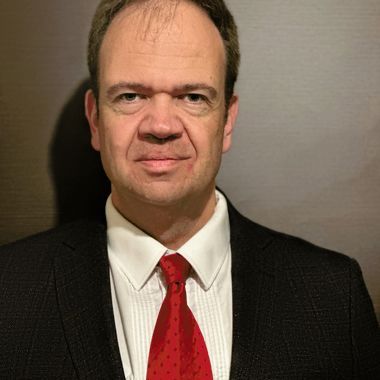
Alexander Vassiliadis has 20 years of experience in the maritime sector and 12 years of experience in the aviation sector.
His seagoing career started on container ships and bulk carriers before he moved to the cruise ship sector, where he worked his way up the ranks of Chief Officer. After leaving the ships, he underwent training to become a Commercial Pilot in 2014, at the same time he qualified to become a human factors instructor. Since 2015, Alexander is working in a variety of instructor and leadership roles in the wider training field, the last of which cover the position of Training Manager and Senior Lecturer.
Alexander holds the degree of Graduate Engineer in Nautical Science from the University of Applied Science in Elsfleth (Germany) in addition to his Certificate of Competency as Chief Officer and his Commercial Pilot License. Presently, he is studying to obtain his MSc. in Maritime Education and Training at Southampton Solent University. He is a qualified Simulator Assessor and a Member of The Nautical Institute and The Royal Institute of Navigation.