Speakers
Technology, Automation, and Maritime Responsibility
The rapid acceleration of connectivity and data-driven technologies as well as increased use of automation and digitalisation in the maritime industry is widely discussed. We see ships becoming more sophisticated, monitored and performance analysed as the industry pushes for ever-more efficiency. Far less attention, however, is paid to the ethical implications of these technological developments for the men and women who operate vessels that are becoming increasingly complex socio-technical systems.
Emerging evidence from academic and industry research, supported by operational experiences shared by seafarers, suggest that technological advancement is not impact-neutral for the seafarer. New technologies present opportunities to enhance safety, decision-making and operational efficiency, as well as improvements to crew wellbeing and support. However, the same technologies can also introduce additional demands, unintended consequences and latent risks that affect both vessel and human safety.
Drawing on early findings from the STEER Project, including literature review and direct engagement with seafarers and industry stakeholders, this presentation explores the duality of technological impact at sea. It is further informed by the presenter’s professional experience, including over 15 years at sea within the past 25 years, spanning a period of significant technological transformation in both society and the maritime sector.
This presentation highlights the often-overlooked ethical polarity inherent in technological implementation through practical, operational examples. These include the impact on fatigue and cognitive distraction, as well as the dual role of monitoring systems and wearables in both enhancing safety and raising concerns around privacy. Such examples underline a broader ethical challenge facing the maritime industry. Technological innovation is reshaping not only how ships operate, but also how seafarers live, work, rest and make safety-critical decisions. The presentation argues that the industry’s ethical responsibility extends beyond compliance and performance, to actively consider human wellbeing, autonomy and professional judgement.
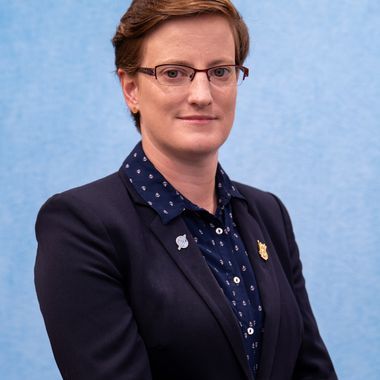
Capt. Ann Pletschke CMarTech FIMarEST has over 25 years’ experience across both seagoing and shore-based maritime leadership roles. Her career has included command of modern, highly automated DP vessels, alongside senior positions responsible for marine standards and contributions to autonomous shipping development.
She is currently the Project Lead for the STEER Project, a Lloyd’s Register Foundation- funded initiative delivered by The Nautical Institute, examining the impact of emerging and existing technologies on seafarers, with a focus on human performance, safety and wellbeing.
Capt. Pletschke brings a unique combination of operational credibility and research expertise, underpinned by recent command experience. Her academic work includes research into the potential impacts of remote vessel operation on diversity and accessibility within the maritime workforce, undertaken as part of her Master of Engineering degree completed in 2024.
She has investigated multiple serious marine incidents, including fatalities, as part of her role as a Designated Person Ashore and marine consultant. Since 2013, she has led her own marine surveying and consultancy business, working across vessels spanning a wide spectrum of technological maturity, from highly advanced, data-driven operations to more low-tech vessels. This breadth of experience offers insight into disparities in technology access and implementation, as well as the varying conditions under which seafarers operate. Her involvement in maritime charitable work further highlights how technological advancement is not always applied equitably or with consistent consideration of seafarer wellbeing