A New Era for Maritime Education: Inside the Upcoming Maritime Academy
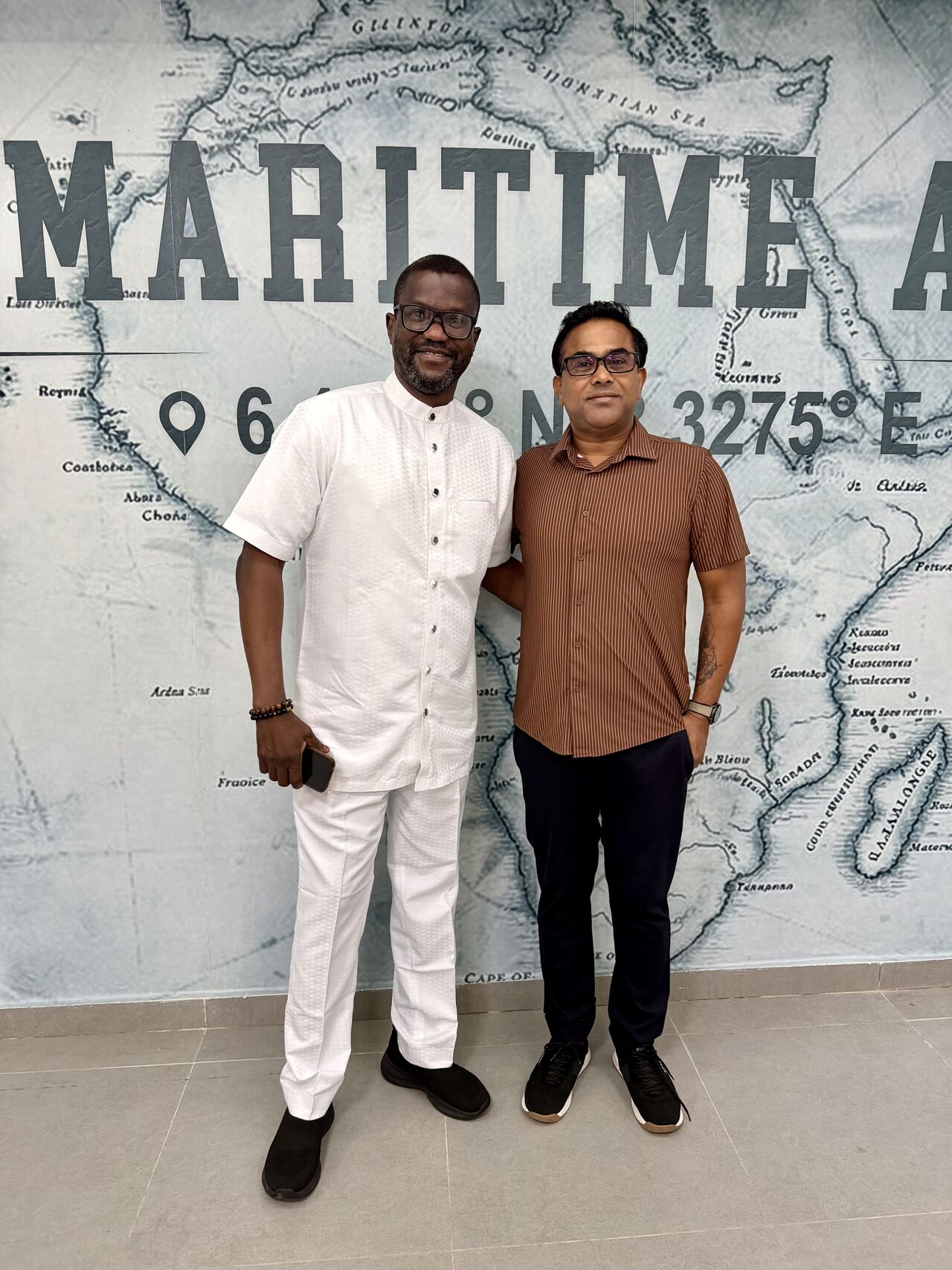
Captain Vikas Patra (FIMarEST and an IMarEST Council Member) and his dedicated team received me warmly and walked me through what I can only describe as one of the most thoughtfully designed maritime training facilities.
The tour started in the main simulation complex, and it set the tone immediately. Real vessel operating conditions replicated across multiple environments: the ultra-modern vessel bridge simulation room with a 360° view deck that was, for me, the undisputed highlight of the visit; others were the crane and engine room simulators; and an electrical room simulator, etc. This is a hands-on, immersive training infrastructure that rivals what you would find at internationally accredited maritime institutions.
Beyond the simulators, here is a non-exhaustive glimpse into the cutting-edge facilities that will soon shape the next generation of maritime professionals:
1. Connected Classrooms: The learning spaces are fully climate-controlled, equipped with high-speed internet, and feature dual large-screen displays to facilitate modern, interactive instruction.
2. Comprehensive Library Services: Students will have access to both a state-of-the-art digital library and a robust conventional library, ensuring access to global maritime research, historical texts, and modern engineering journals.
3. Dedicated engineering training area: a real ship engine with propeller shaft mounted for practical instruction, backed by solar and diesel generating infrastructure
4. Catering school and dining facilities: a canteen and catering training school preparing cadets for the full spectrum of life at sea
5. Multipurpose sports and assembly hall: a large space serving both recreational and formal gathering purposes
6. Hostel accommodation: purpose-built residential facilities for the academy's student population
7. Medical treatment and emergency medical training facility: an on-site unit that serves the dual purpose of providing healthcare and medical attention to cadets and staff, as well as delivering hands-on emergency medical response training required under international maritime standards
8. Fabricated ship vessel mock-up: purpose-built and configured as a ship-shaped structure, serving as a dedicated live environment for emergency evacuation drills, fire drills, and safety response training
9. Large Swimming Pool: To ensure full compliance with sea survival and water safety standards, the academy features a newly constructed, large-scale swimming pool for practical emergency aquatic training.
10. Independent Power Grid: To guarantee uninterrupted learning, the facility utilises a robust hybrid energy system, combining a newly installed solar station with reliable diesel generators.
Nigeria has the coastline, the industry, and the ambition. What we have sometimes lacked is a world-class training infrastructure to match. What I saw suggests that the gap is closing.
Congratulations to Capt. Vikas and the entire Maritime Academy team. The IMarEST Nigeria Branch community and I look forward to the commissioning and to what this institution will contribute to Nigeria's maritime future.
What does world-class maritime training mean for Nigeria's blue economy ambitions? I'd love to hear your thoughts:
Share your thoughts on IMarEST Connect.