The chief engineer who volunteers on hospital ships
IMarEST member David Cox is a retired Marine Engineer. His lifelong career took a very different turn when he started to volunteer on board with Christian healthcare charity, Mercy Ships.
Umu was three when I met her in Senegal, West Africa. She was born with a large, painful tumour on her face and neck that made it difficult for her to eat and breathe. Umu’s mum had taken her to many hospitals, desperately looking for help. But there were no surgeons in her home country who could treat Umu’s condition.
When we sailed into the port of Dakar in Senegal, our volunteer medical staff had to operate immediately as the tumour was growing dangerously close to Umu’s airway.
Umu’s free surgery on our hospital ship was successful and she lived on the Africa Mercy for a few months as she recovered.
One day, I was in my office on deck 7 when a volunteer nurse who was showing Umu around the ship passed by. I’ll never forget this beautiful moment when Umu ran into my office, gave me a high five, grabbed my stapler and ran off with it. The nurse picked her up and retrieved the stapler, but as they left and closed the door, I sat there feeling quite emotional.
As a Chief Engineer on any other ship, that wouldn’t have happened. But to see her little face, with a big cheeky smile, recovering from life-saving surgery and knowing I had a part to play was amazing.
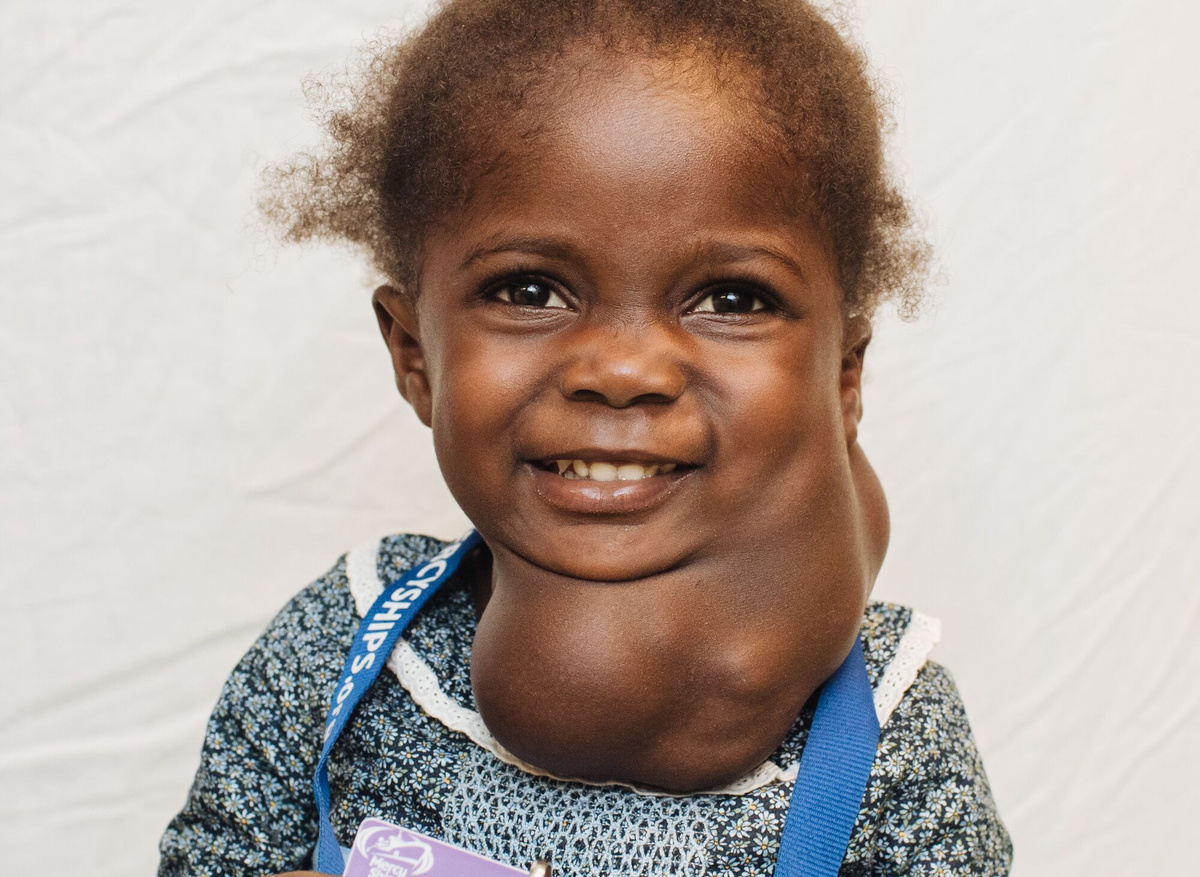
Umu before her surgery
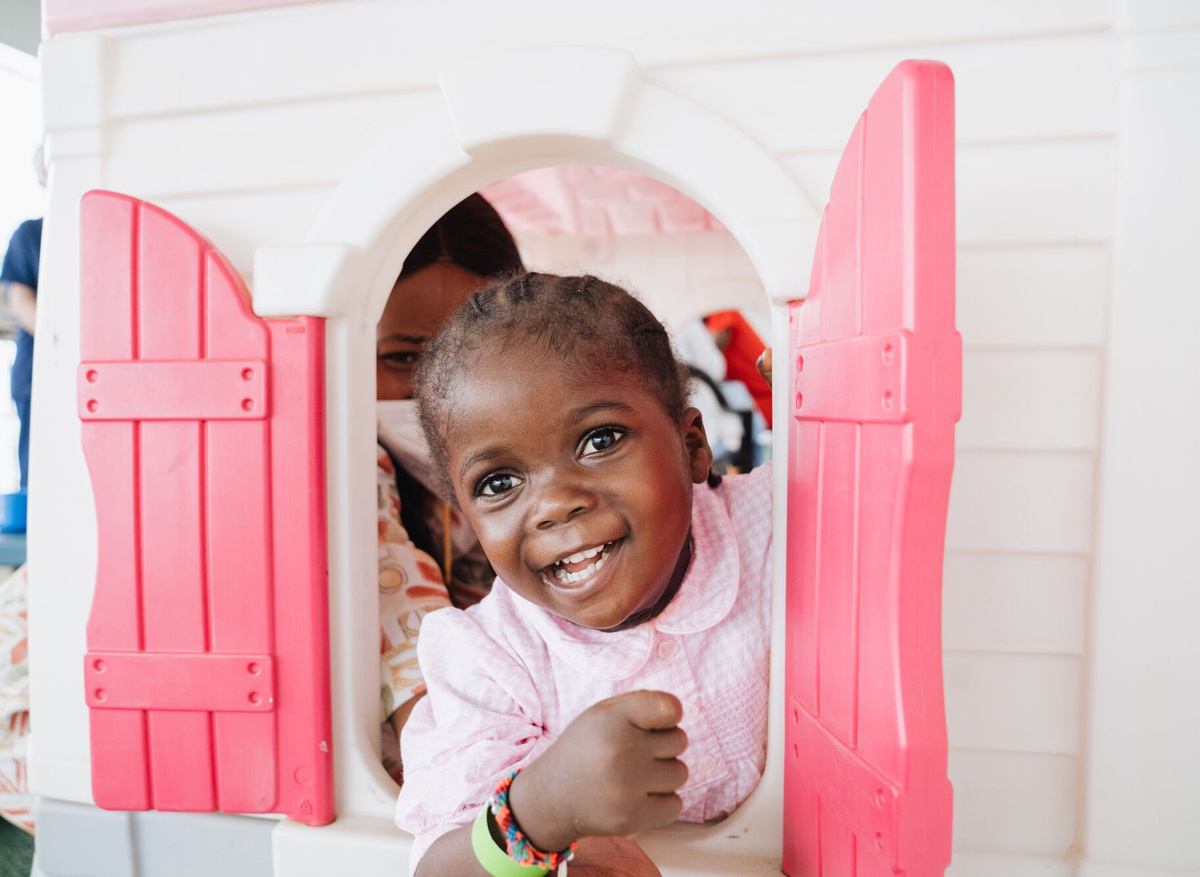
Umu after her successful surgery
My journey to Mercy Ships
I had always wanted a career on ships and began training at Southampton College of Higher Education at 18 (now part of Warsash Maritime School). At 20, I was off to sea with BP Shipping on their flagship, the British Respect.
Over the years, I worked on ferries and moved through the ranks, transitioning to a technical management role ashore. I remember spotting a Mercy Ships advert in a trade magazine, thinking it looked like something I’d love to do, but at the time, with other commitments I didn’t feel I was in a position to volunteer.
Fast forward to 2020, retirement was approaching and I realised now was my time. By August 2020 I was on the Africa Mercy as Second Engineer.
A life-saving hospital ship
The 16,572 GT Africa Mercy started life as a Danish rail ferry, but was converted into an ocean-going hospital ship complete with five operating rooms, a four-bed recovery area, an intensive care unit for up to five patients, and a 75-bed hospital ward. About 400 volunteer crew members from around 40 nations staff the ship.
The community on the Africa Mercy is one of the things I love the most. It’s just incredible, everyone on board working for a common goal. At meal times, I could sit down at a table with a teacher from the on board Academy for crew children, a surgeon, or a baker. Every possible job you could imagine in a small town is on the ship.
The Africa Mercy and its sister ship, the Global Mercy, remain in port for around 10 months, and during that time can complete over 4,500 free surgical procedures for people in sub-Saharan Africa who otherwise would have no access to safe, surgical care. From huge tumour removals to straightening bowed legs and removing cataracts, it’s just incredible to see children walking without pain, families able to see each other and life-saving operations taking place.
Since my first trip to the Africa Mercy, I’ve volunteered six more times as Chief Engineer, both in port and sailing with the ship to Senegal, Madagascar and Durban.
A Chief Engineer’s role on a hospital ship
My work on board the hospital ship is very different to my background with tankers and ferries. With ferries, you have three to four crossings a day. Tankers are always under pressure for a quick port turnaround so timing and schedules are crucial. For Mercy Ships, being in port for up to 10 months at a time, the priority is to keep the hospital running. I led the team that looked after all the technical aspects of the ship, running all the machinery safely and ensuring the life-saving work continued.
One weekend I was off the ship with a friend. We were in a shop when two women approached and mentioned Mercy Ships. Through a translator, I realised she was telling us that Mercy Ships had saved her son’s life.
In that moment, my crewmate and I – just an engineer and a dining room assistant – realised we were part of something so much bigger. Lives are transformed by the work of Mercy Ships and every role is integral to the work.
Find out how you can volunteer with Mercy Ships: mercyships.org.uk