Speaker:
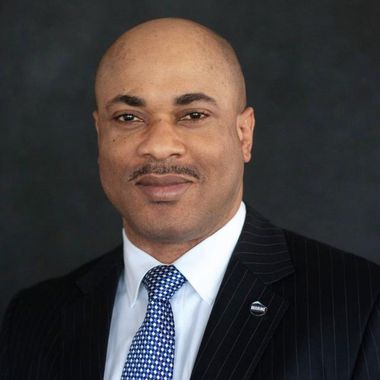
Dr Nimi Abili PhD, MBA, CEng, CMarEng, FIMarEST,
Founder & CEO, Greater Offshore
Chairman, IMarEST Houston (US Gulf Coast) Branch, IMarEST
About the webinar:
The development of Deepwater Fields in an Offshore Basin poses huge technology challenges. These challenges are further complicated as the field is remotely located offshore with a long step-out distance from existing processing facilities. A good number of such fields exist in Offshore West Africa with no concrete plans fully in place to develop them, arguably, due to limited technology applications, instability in fiscal policy, obsolescence bargaining, incorrect estimates in recoveries and economics occasioned by erroneous estimates in basic input parameters. These deepwater fields, remotely located Offshore, require one form of processing or another before they can be commercially productive.
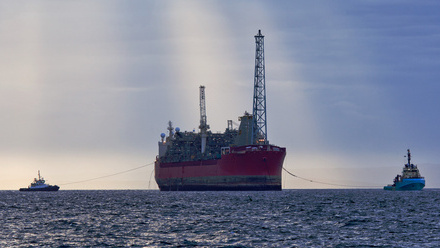
Subsea Processing has matured to become one of the most innovative technologies at the disposal of the oil and gas industry. As exploration and production are focused on unlocking reserves in difficult environments such as ultra-deepwater, there is impetus for continued innovation and qualified subsea technologies to boost operational efficiency and thus accelerate emission reductions. Subsea processing offers a viable and attractive option in developing these fields. However, the qualifications of different technologies available for subsea processing have been conducted and their various readiness levels determined. A systematic data analysis of an existing deepwater field has also been done to reveal the economic value of employing subsea processing to drive growth in net hydrocarbon volume and Return on Investment (ROI). Increased recovery and reduced Operational Expenditures (OPEX) have been established as vital incentives for developing offshore fields economically. Various methods of overcoming the long distance associated with remote fields are developed and the best method which incorporates a Floating Storage Unit (FSU) identified. Deployment of Insight-Driven Digital Solutions for deepwater field development and remote operations optimization, prescriptive maintenance, and other case studies, have accelerated efficiency boosting in meeting Increased Oil Recovery (IOR) and sustainability goals. A novel strategic approach which considers developing a group of fields together rather than a single field at a time, employing digital twin and edge analytics for embedded intelligent operations, is adopted to develop deepwater fields in Offshore West Africa.
The cumulative effects are significant increases in volume of hydrocarbons recovered while greatly reducing the OPEX – the two most critical drivers in the economic development of offshore fields. The proper equipment and digital solutions for carrying out these processes is incorporated in a Full Subsea Processing Station (FSPS). Application of this novel strategy will enable deepwater fields to be developed economically, to sustain techno-economic growth in offshore developments.