Smart towing to the rescue in Norway ahead of SOLAS update
As Norway experiments with adaptable towing solutions ahead of new SOLAS requirements for emergency towing on non-tankers, we speak to Terje Våge, Lead Naval Architect at Ulstein, about how naval architects can prepare for the new rules
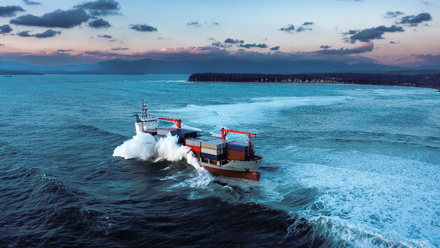
When a vessel drifts, it becomes a risk to public safety and the environment. Unintentional and uncontrolled drifting can result from a loss of operational control, power loss, machinery failure, propeller damage or maintenance works. This is already a reality each year in Norway, where over 150 drifting ships are recorded annually by the Vardø Traffic Center.
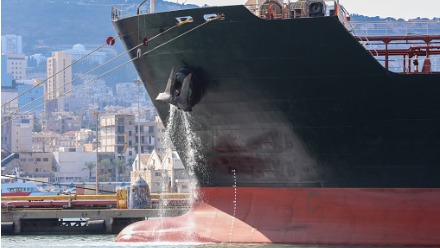
Drifting vessels run the risk of collision or grounding if the vessel is not kept under control or promptly towed out of harm’s way. For tankers, that becomes a major hazard due to the potential of an oil spill. For decades, emergency towing has been a SOLAS requirement on tankers from 20,000 DWT and above, at both ends of the ship (the bow and stern). Other large commercial vessels can also be hazardous when in distress, yet do not always have these emergency systems in place.
The new SOLAS requirement
That changes from 1 January 2028. SOLAS (Chapter II-1/3-4) amendments will require new non-tanker ships of 20,000 GT and above to be fitted with emergency towing arrangements on board [1], while tankers’ existing rules still apply.
These new rules are prompting discussions and ideas around how emergency towing arrangements can be adapted to different vessel designs and hull types. While traditional towing designs for tankers have set an established foundation, the framework guidelines appear to support flexible configurations.
Testing out smart towing in Norway
Norway is gearing up to help maritime prepare for the regulatory update. SINTEF built over a decade of experience researching solutions for vessels that do not yet have towing arrangements in place. They have worked with the Norwegian Coastal Administration (NCA) and Coast Guard on competency planning for personnel on vessels conducting emergency towing operations, as well as simulation tools on drifting ships.
This year, SINTEF and Ulstein conducted a rescue exercise for cruise ship MS Spitsbergen. Off the coast of Lofoten, they demonstrated completely new emergency towing technology and new methods for transferring the towing line. The exercise involved the use of a surface drone, representing how autonomous technology could play a part in these emergency systems of the future. The exercise was uniquely collaborative. The Norwegian Coast Guard vessel KV Barentshav, and the 330 Squadron’s SAR Queen rescue helicopter also took part in the exercise.
Experiments like these help maritime professionals, such as naval architects, learn and prepare for regulatory change. Terje Våge, Lead Naval Architect at Ulstein Design & Solutions AS, shared some preparation pointers with IMarEST.
“The design of a vessel should include dedicated arrangements for emergency towing,” he said. “This may range from relatively simple solutions, such as a Smit bracket and dedicated emergency towing lines, to more advanced systems, including purpose-built storage winches for the towing lines.”
“It is also important to develop vessel-specific procedures for emergency towing operations, adapted to the selected equipment. One of the main challenges in practice is transferring the messenger line between vessels in order to establish the towing connection.”
In addition to the challenge of connecting the towline between a tugboat and drifting ship, another aspect is the human element.
“Finally, the chosen solution should be suitable for regular training, allowing crews to conduct exercises at least once or twice a year,” he said. “In our experience, practical operability and crew familiarity are just as important as the technical solution itself.”
In addition to compliant designs, documentation and training remain important steps to prepare for the upcoming SOLAS amendments. The rescue exercise at Lofoten showed how that synthesis between the technology and the crew can lead to efficient towing designs that are prepared for unexpected emergencies.
Sources:
[1] ClassNK, Technical Information No. TEC-1335, “Summary of the Outcomes of MSC 108”, 8 November 2024.
Tell us what you think about this article by joining the discussion on IMarEST Connect.
Image: Cruise ship, Norway. Credit: Shutterstock