Why is Innovation So Hard?
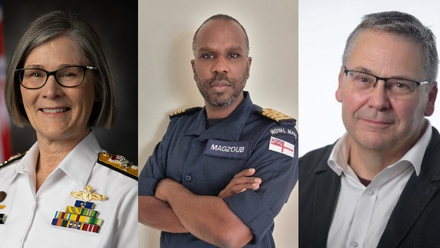
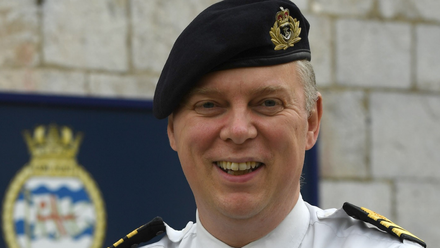
As the person responsible for future force design in the UK’s Royal Navy, Captain Mo Magzoub OBE FIMarEST has first-hand experience of nurturing innovation. Drawing on that experience, he explains why change is often harder than it appears.
I do not claim to be an innovation expert. What I can offer is my experience of helping to design a Royal Navy fit for the future. During that journey, I have found that the hardest barriers to innovation are rarely technological. They are human and organisational: our attitude to risk, our ability to imagine something genuinely different, and our instinct to perfect what we already have.
Together, these create three recurring traps. We fear the uncertainty that comes with change. We struggle to imagine an alternative to the systems and structures we know. Then, when a new idea does emerge, we often burden it with demands for certainty and completeness before we are prepared to test it.
The risk trap
There is a familiar saying that ‘culture eats strategy for breakfast’. In my experience, it is almost universally true. An organisation can have the best strategy in the world, but if its culture is not ready for change, that strategy will never become reality.
At the heart of this cultural challenge is risk. Innovation introduces uncertainty, and uncertainty creates discomfort. There is personal risk in proposing a new idea, reputational risk if it fails, and organisational risk in choosing a path that departs from the accepted norm. The simplest response is often to maintain the status quo. But that response considers only one side of the equation. The question is not simply, ‘What if this fails?’ It is also, ‘What if we do nothing?’
Risk aversion creates inertia, making organisations like oil tankers changing course: slow and difficult to manoeuvre. Processes, structures and assumptions endure long after the reasons for creating them have been forgotten. Challenging them takes effort and careful thought, but failing to challenge them can be more dangerous than changing them.
In my role, I regularly remind people that the greatest risk lies in conflict. We are trying to deter the next war and, if deterrence fails, to fight and win. That will require us to take calculated risks now. Preserving the status quo may feel safe, but it is not a risk-free choice.
Capacity is another frequently overlooked part of the problem. Innovation requires time to think, reflect, research and experiment. Many organisations have spent decades becoming leaner and more efficient. We have become exceptionally good at delivery, but often at the expense of creating the space needed to scan the horizon or explore a different approach.
An innovative organisation must also distinguish between intelligent failure and avoidable failure. It should not give people permission to fail carelessly. It should give them permission to test, learn and sometimes discover that an idea does not work. Not every experiment will succeed, but every well-designed experiment should produce knowledge.
That requires leaders to be comfortable having their ideas challenged. I have become entirely comfortable with being told I am wrong. In fact, I value it. At times, I will deliberately offer an imperfect or provocative answer to prompt a better one. This reflects Cunningham’s Law: the idea that the quickest way to get the right answer online is not always to ask a question, but to post the wrong answer and allow others to correct it. The point is not to be deliberately difficult. It is to create a culture in which finding the best answer matters more than defending the first one.
The imagination trap
The second challenge is that people do not always know what to ask for because they struggle to imagine what does not yet exist. If people centuries ago had been asked how to improve transport, many might have asked for faster horses. They would not have asked for an internal combustion engine because most could not yet envisage it.
The same remains true today. Organisations naturally frame new problems through the systems, structures and technologies they already understand. That makes incremental improvement easier to describe, justify and procure. Truly innovative ideas often emerge from outside those established ways of thinking. The challenge is ensuring that they reach receptive ears.
It is easy to tell people to go away and innovate, but that approach has failed for decades. Terry Pratchet challenges us in the Discworld series of books to imagine a new colour – Octarine. I see this as difficult as simply asking people to go away and innovate. Showing people what innovation looks like is far more powerful. A practical demonstration gives people something tangible to understand, challenge and refine. Once they can see the alternative, innovation becomes less abstract, more achievable and infectious.
This matters in an organisation with a strong sense of heritage. The Royal Navy is rightly associated with traditions that extend back hundreds of years, but tradition and innovation are not opposites. In the Royal Navy’s case, innovation is part of the tradition, and we occasionally have to remind people of this.
The RN helped lead the transition from sail to steam, introduced the battleship, then the transition from battleships to aircraft carriers. Those advances were made possible by people in the Royal Navy and the UK defence industry imagining capabilities that did not yet exist. The lesson is not that we should abandon our heritage to innovate. It is that our heritage was created by people who dared to innovate and were heard..
The perfection trap
The third challenge is perhaps the most dangerous: allowing perfect to become the enemy of the good.
Engineers, myself included, are often drawn to elegant and complete solutions, and above all to certainty. Innovation rarely works that way. It is usually untidy, iterative, and occasionally goes backwards. Clayton Christensen’s The Innovator’s Dilemma explains the first hydraulic excavators had significantly less capability than the traditional cable actuated versions – but they had more potential, hence their eventual dominance. Innovation develops through testing, learning and improvement rather than arriving fully formed.
Consider the horseless carriage. Introducing the first motor car to a world accustomed to horse-drawn transport was a remarkable leap. The innovation was not a car equipped from the outset with air conditioning, satellite navigation, and Bluetooth connectivity. It was the transformative leap from one model of transport to another. That was the minimum viable capability, the refinements came later.
Too often we gold plate requirements and wait for refined capabilities from the “Gucci” solution. If we had demanded Apple Car Play in the first horseless carriage, we would never have made the leap. It would have been too complex, too expensive and too late.
Secondly, there is an important distinction between improvement and innovation. Improvement asks how we can make the existing solution better. Innovation asks whether the existing solution is still the right answer.
That distinction matters enormously in defence. If we are not careful, our instinct will always be to ask how we build a better version of the platform we already understand. Sometimes that will be exactly the right answer. But sometimes the more important question is whether advances in autonomy, uncrewed systems and digital technology have created space for an entirely different answer. We call this a “Question 4” moment.
In the Royal Navy, we are moving towards a ‘Hybrid Navy’ that combines crewed platforms with autonomous and uncrewed systems. Beyond adding new technology to the Fleet, this requires us to consider the infrastructure, command arrangements, training, doctrine, support and ways of operating that will enable the whole force to work together. We already have highly capable ships. The wider challenge is to understand what should complement them and how new combinations of capabilities might generate maritime power differently. Most importantly for now, however, is that we must challenge ourselves to stick to the minimum viable capability in introducing the Hybrid Navy and avoid the gold plating. Execution and timing is the key.
How do we overcome these barriers?
First, we need to reframe risk. Every proposal for change should be tested against two questions: ‘What happens if we try this and fail?’ and ‘What happens if we do nothing?’ Both matter. Too often, only the first receives serious attention. In the case of the Royal Navy force design, the changing threat environment and adversary capabilities make it clear that doing nothing is no longer an option.
Second, we need to make the innovative alternative visible. Facts and data matter, but people also need a clear account of what the future could look like, where they fit within it and why the change matters. Demonstrations, experimentation and compelling narratives turn innovation from an abstract ambition into something people can understand and help shape.
Third, we need to prefer learning to perfection. That means putting workable ideas into people’s hands early enough to test them, accepting that the first version will not be the final version, and improving incrementally through experimentation rather than waiting for the perfect solution.
Ultimately, innovation is not an end in itself. In the Royal Navy, it is about maintaining operational advantage, strengthening deterrence and ensuring that we can fight and win if required. That means accepting some uncertainty now rather than discovering too late that preserving the status quo was the greatest risk of all.
Interested in this topic? Captain Mo Magzoub will be a keynote speaker at INEC/iSCSS 2026.