Global partnerships in focus for IMarEST
As geopolitical tensions, climate pressures and digital risks reshape global shipping, the need for international collaboration has rarely been greater
The sector is navigating a perfect storm, with geopolitical instability and continuing conflict dominating risk assessments. Adding to these pressures is decarbonisation, arguably the most transformative long-term challenge. The sector is under intense pressure to meet ambitious emissions targets set by the IMO. That is driving rapid, and expensive, investment in alternative fuels, vessel retrofits and new propulsion technologies.
For many owners, particularly those with older tonnage, the economics are becoming difficult. Compliance is no longer optional, but the pathway is complex and capital-intensive – and, after the pause button was hit on the IMO’s Net-Zero Framework, that pathway is also uncertain and beset by ambiguity. This is an area where global alignment and knowledge sharing are essential to avoid fragmentation.
Climate change is also creating very practical operational problems. Reduced water levels at the Panama Canal, for example, have constrained traffic, while extreme weather events are increasing delays worldwide. These chokepoint disruptions demonstrate how environmental factors are now directly influencing trade flows – and that this is a global issue that requires international collaboration.
Global partnerships are also needed to address the new vulnerabilities caused by increased digitalisation and connectivity at sea. Modern vessels are increasingly exposed to cyber threats that could disrupt navigation, cargo systems or port operations. Cybersecurity maturity still varies widely across the global fleet and a weak link anywhere in the chain can create systemic risk. Industry bodies, flag states and operators need to work together on common standards and best practice.
The need for global cooperation
Partnerships and international cooperation are key because unilateral solutions rarely work when it comes to global issues. This was reflected in the UK government’s trade engagement with India in October 2025. During the visit led by Prime Minister Keir Starmer, maritime capability and skills collaboration were highlighted as part of the broader push to deepen bilateral economic ties. The mission underscored how maritime expertise is increasingly viewed as a strategic component of international trade relationships.
For organisations such as IMarEST, the priority is facilitating that global dialogue, bringing together engineers, scientists and maritime professionals to share evidence-based solutions. That’s why last year IMarEST announced it was setting up its first branch in India to collaborate on opportunities in skill development sector across the country, together with significant investment and projected revenue – as mentioned in the UK government’s press release.
This wasn’t the only India-focused investment announced during the trade trip. Lloyd’s Register is delivering a £75,000 project developing India’s National Green Shipping Policy, while investing £4.5 million, adding 112 experts, and strengthening delivery centres across India.
These kinds of global collaboration are essential in a world that seems more uncertain than ever.
Get involved in IMarEST’s new branch in India.
Tell us what you think about this article by joining the discussion on IMarEST Connect.
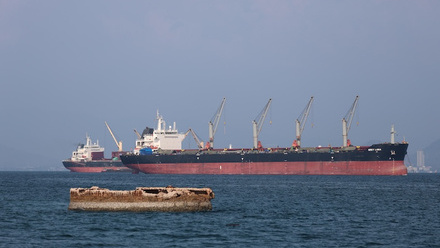
Image: cargo ships, containers, and oil rigs in Kerela, India. Credit: Shutterstock.