IMarEST-MMOA bursary award – a defining career moment
From watching Free Willy to bursary winner, Déspoina Papadopoulou says her new career as a marine mammal observer means she’s living a childhood dream
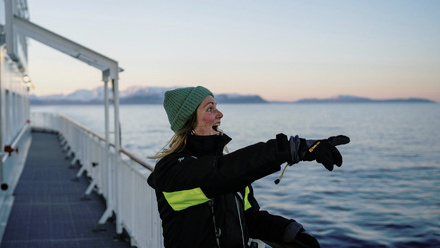
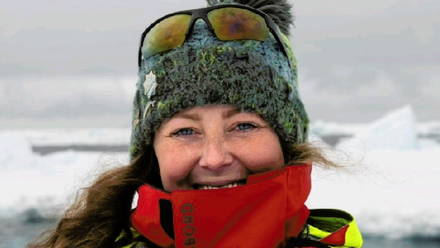
Developing a love and respect for the sea from a very young age, IMarEST-Marine Mammal Observer Association (MMOA) Bursary for Aspiring MMOs 2026 winner Déspoina Papadopoulou describes now having “the career I had always dreamed of”.
“The defining moment that led me towards a career working with marine mammals came when I watched ‘Free Willy’ for the first time,” says Papadopoulou.
“I was seven years old and the film had a profound impact on me. From that point on, I knew I wanted to work with marine mammals and, if possible, with orcas in particular.”
Gaining a Bachelor of Honours in Oceanography and Marine Biosciences from the University of the Aegean (Greece) and Master’s in International Marine Sciences from Heriot-Watt University (Scotland), Papadopoulou only recently fully transitioned into marine science.
“I left the financial sector as soon as I secured my first offshore position as an MMO. From that point onward, I was able to fully dedicate my career to working in the marine environment.
“I am incredibly proud of having ‘made it’. I come from a country where many young people have to set aside their dreams and settle for a practical job simply to afford everyday life. Moving to Scotland gave me the opportunity to pursue the career I had always dreamed of and within five years I managed to turn many of those dreams into reality.”
Remarkably, Papadopoulou says she only became aware of the existence of the role of MMO when attending the First Marine Mammal Observer Association Conference in 2024.
“By February 2025, I was fully qualified to work offshore as an MMO and by September I was onboard my first project. At the time, I only had a vague idea of how I might eventually break into the marine environmental sector, so achieving that goal in such a short period exceeded all my expectations.
“I still remember the moment I received the message saying, ‘you got accepted’ – that is etched in my mind and heart. It represented years of hard work, determination and perseverance, and it was the moment I knew I had finally taken the first real step toward the career I had envisioned since childhood.”
Expressing gratitude to mentors Niru Dorrian and Stephanie Barnicoat, as well as to the IMarEST and MMOA, Ms Papadopoulou describes winning the Bursary as a “defining moment” in her journey.
“It has helped me develop as a technically-skilled, adaptable and ethically-grounded professional.”
Alongside several continuing professional development courses, she is considering a second Master’s Degree focused on marine mammals among many other future plans and “would also be very interested in pursuing a PhD if the right opportunity arises”.
“Ultimately, my goal has always been to work with marine mammals. I want to make a meaningful contribution to their conservation – to help protect them, better understand them and contribute to the scientific knowledge that supports their future.”
She emphasises that “we all have a role to play” in preserving the future of the sea.
“The ocean is not something separate from us – it is the life-support system of our planet – it is alive and gives us far more than we often realise.
“The challenges facing our oceans today – climate change, pollution, habitat degradation and biodiversity loss - can sometimes feel overwhelming. However, I believe it is important to remember that positive change is possible when individuals, communities, industries and governments work together.
“One thing I have learned through my journey is that people protect what they understand and what they care about. The more we educate ourselves about the ocean and the incredible life it supports, the more motivated we become to safeguard it for future generations.
“Every action matters, no matter how small it is. My hope is that more people will recognise their connection to the sea and become part of that effort as well.”
Tell us what you think about this article by joining the discussion on IMarEST Connect.
Image: Orcas, Alaska. Credit: Shutterstock