MASS Code: a new framework for autonomous shipping
Regulators are catching up as autonomous ship technology continues to advance
After nearly a decade of negotiations, the International Maritime Organization’s International Code of Safety for Maritime Autonomous Surface Ships (MASS Code) came into effect in July 2026. The code sets out a safety framework for remotely controlled or autonomous cargo ships over 500 GT embarking on international voyages, ensuring that, as the IMO says, are “designed, constructed, operated and certified to safety and environmental standards equivalent to conventional ships.”
Currently, adoption of the mass code is voluntary. The code is expected to become mandatory under the SOLAS Convention (International Convention for the Safety of Life at Sea) by January 2032.
A forward-looking code
Both autonomous and remote-controlled vessels are still very much an area in development – something the code has been designed to take into account.
“This is exciting moment, because the technology is exciting, but also because of how IMO and nations are approaching the subject with a forward outlook,” says Captain Panos Stavrakakis FIMarEST, Director of Operations at the Cyprus Marine and Maritime Institute, and co-chair of IMarEST’s Maritime Autonomous Surface Ships (MASS) SIG.
Moreover, the Code is goal-orientated rather than prescriptive. Instead of specifying exactly how a particular safety outcome must be achieved, it establishes the outcome that vessels and operators need to meet while allowing flexibility over how they do so.
“This is something different from IMO because the industry is very used in prescriptive regulations,” says Stavrakakis. “Prescriptive regulations might sound good, but at the end of the day, they can be a huge barrier for efficiency and safety…and goal-based regulations can create a regulatory environment friendlier to business.”
Supporting wide-scale adoption
If MASS vessels are to move towards wider commercial use, Stavrakakis believes that “the big question is not technology. It's the market drivers, it's regulations.”
The adoption of the MASS Code, he says, provides industry with a level of assurance that can support investment and adoption at scale. “We need the regulators and the class societies to support the industry, to help them to remove any barriers, perceived or real, for the industry to invest and adopt these technologies.” That matters for both ship owners who are interested in adopting MASS vessels into their fleet, but also for innovators who develop MASS technologies in the first place.
Stavrakakis does not expect to see a sudden flurry of activity. Rather, “momentum will be slow”.
“In general, the industry is very traditional and conservative when it comes to investing in new technologies. But this creates a big opportunity for the first adopters to drive their market, and for pioneers to drive the market.”
An opportunity for IMarEST members
Certainly, few would argue that anything moves quickly in the maritime industry. Highlighting regulatory authorities, Stavrakakis says that they can be slow to act and reactive in nature. “This creates a big opportunity for the IMarEST community to take a proactive approach and make a contribution to the industry.”
The recently reactivated MASS SIG is already looking at creating resources and initiatives to support the industry. Ideas currently in discussion include professional guidance and a guide that explains the code more simply than the official documentation, helping maritime professionals understand what the new framework means in practice. The SIG has also had discussions about co-organising an international maritime autonomy conference.
“We have a strategy document and we have many ideas. The people currently in the SIG want to deliver something tangible, and that's amazing,” says Stavrakakis. “We have a good group of doers and committed people, and we’d really welcome more IMarEST members getting involved, whether they bring experience, ideas or simply an interest in maritime autonomy.”
Want to know more? Join the MASS Special Interest Group
Tell us what you think about this article by joining the discussion on IMarEST Connect.
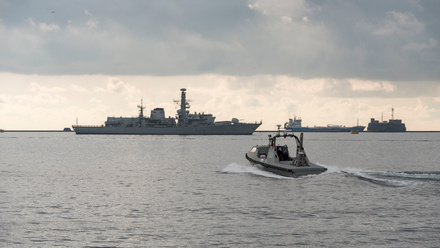
Image: Unmanned surface vessel undergoing trials in Portsmouth, 2023. Credit: Kevin Shipp / Shutterstock.com