Red Dwarf star: ‘Most ferries will be electric’
TV presenter Robert Llewellyn on decarbonising shipping, being a shoemaker and the importance of engineering, science and technology
Before Red Dwarf and Scrapheap Challenge, you led a variety of alternative existences, not least as a shoemaker, a geodesic dome builder and a part-time tree surgeon. Have you always been able to turn your hands to practical pursuits?
I’m slightly ashamed of some of my early attempts at building shelters, they were very rudimentary, but I was inspired by the likes of Buckminster Fuller, E. F. Schumacher and the notion of smaller, community-based economic systems.
As for the tree surgery, I’m slightly horrified by the memory of how high I would climb dead elm trees in Oxford, with a chainsaw hanging from my belt as I helped a tree surgeon drop these once magnificent trees in people’s back gardens. But I was generally penniless and mostly hungry which eventually led me into becoming an apprentice bespoke shoemaker in London.
So in terms of manual ability, I could make elegant shoes, I have rebuilt the gearbox and replaced the clutch in a Morris Minor van, [and] with some guidance I was just about capable. I have now watched so many incredibly capable people, I have lost a lot of my former confidence.
On that note, had acting and comedy not come your way, what full-time career would you have pursued?
I would love to have worked in some area of large-scale engineering - bridges, huge cranes, maybe civil engineering - but my temperament and profound difficulty with mathematics made those choices unlikely.
I was about 45 when I was diagnosed with dyscalculia (a difficulty in working with numbers) which explained a great deal. For decades every time I dialled a phone number in the days before cell phones it was always wrong. I have learned workarounds now and only wish some teacher had understood what was up when I was at school.
You clearly have an intense interest in engineering and electrification, especially in terms of cars – do you see shipping following a similar pathway in its decarbonisation journey?
Ten years ago, I would have said, “No chance.” Batteries were too expensive, too big and not energy-dense enough to supply the kind of power a large ship needs. However, four years ago I travelled from Denmark to Sweden on a large battery-powered ferry, converted from its original diesel power.
This was not a small boat as I half expected. Twelve articulated lorries were loaded before 40 or 50 cars followed.
Then earlier this year I visited a ship builder in Tasmania where they were close to finishing the construction of the Incat Hull 096, a 130-metre battery electric ferry, now undergoing sea trials. No diesel engines to be seen.
CATL, the world’s largest battery maker, have recently stated they see ocean going cargo ships being battery powered in the next five years.
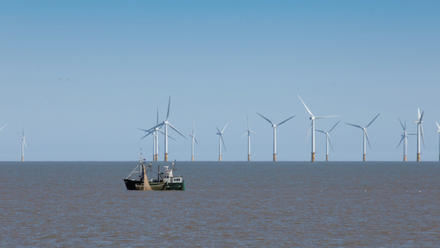
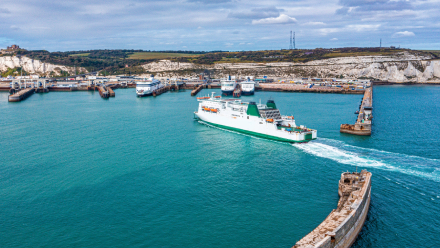
Realistically, I think all river craft, most ferries and any coastal shipping will be electric in the next 10 years. It just makes economic sense - the ships will be much cheaper to run and in the right circumstances, (wind turbines) companies can produce their own fuel.
In Scrapheap Challenge, what were the most memorable engineering attempts of a nautical nature?
Definitely the steam paddle boat challenge [where] two teams built paddle boats, one powered by a combustion engine, one by a steam piston engine they built from scratch.
Unusually neither of them sank, and although the steam paddle boat didn’t win, it was an amazing achievement.
Given your range of experience, have you ever worked directly with those in the maritime and marine industries?
Other than filming on numerous boats and ships, and interviewing captains, designers and engineers who have developed all manner of electric boast and ships, I’ve never directly worked in the maritime sector.
I spent two days filming on an enormous America cruise ship; I sat in the driver’s seat on bridge as we were leaving Portsmouth harbour. They let me ‘steer’ (I didn’t do anything) and I pressed a button that sounded the ships foghorn. So, you know, I’m a seasoned sea dog.
I’ve made TV shows on board HMS Bulwark, an Albion-class landing platform dock and a truly enormous container ship, so I’ve been around a few big boats.
How important is the intersection of science, engineering and technology in futureproofing the planet?
It is, in my humble opinion, critically important. We are in the foothills of another industrial revolution, but this time one where awareness of the impact of our actions must be central. Everything we use is either dug up or grown [and] up until very recently we have lived in a world of endless material abundance.
Tell us what you think about this article by joining the discussion on IMarEST Connect.
Image: Robert Llewellyn. Credit: Jane French.