A boiler explosion highlighted the behaviour of new fuels in colder climes
A fatal boiler explosion aboard the Manhattan Bridge revealed how unfamiliar fuels can introduce unfamiliar risks
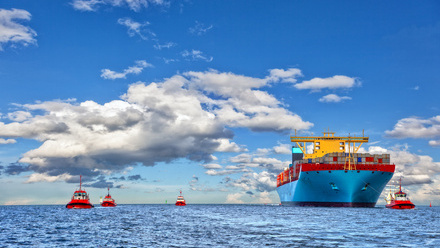
At about 23:04 on 19 January 2017, the auxiliary boiler of the container ship Manhattan Bridge exploded when berthed at Felixstowe. The duty oiler, 35, was killed and the second engineer was burned.
The incident, investigated by the Japan Transport Safety Board (JTSB) with help from the UK's Marine Accident Investigation Branch (MAIB), found ordinary procedures, followed by experienced crew, combined with a fuel problem nobody had anticipated – to deadly effect.
What happened
Manhattan Bridge, owned by East River Shipping, was nearly new at the time of the incident: a 152,297-tonne, 13,900 TEU vessel launched in 2015. On January 16 2017, before entering the North Sea emission control area, the ship switched the main engine, generators and auxiliary boiler from heavy fuel oil to low-sulphur marine gas oil (MGO). That MGO had been bunkered at Rotterdam on 8 November 2016.
Three days later, on the evening of January 19, on the approach to Felixstowe, the boiler's emergency trip alarm sounded four times. The second engineer cleaned the rotary cup burner after the first trip; after the others, an engineer checked the boiler, reset it and restarted it.
At 23:01, with the ship alongside, the alarm sounded again, this time for a "Furnace (Flame-Eye) Abnormal" condition, indicating that the flame-eye sensor had detected flames or combustion within the furnace when the burner was not supposed to be firing. The second engineer went down and met the oiler at the burner.
The burner, forced draft (FD) fan and fuel pump had all stopped, and he saw no flame and no leak. To clear unburnt gas, he switched to manual and started the FD fan. Looking in again, he saw flame, shut the quick-closing fuel valve and tried to stop the fan. The explosion occurred immediately afterwards, at 23.04.
The burner unit door fell to starboard-fore side deck and the secondary air nozzle blew off to fore side by the force of the explosion. The nozzle struck the oiler, who was standing in front of the burner, and he died of multiple injuries. The second engineer's boiler suit caught fire, leaving him with burns to his right hand and thigh.
Why it happened
One contributing cause was paraffin wax coming out of the fuel in the cold. Low-sulphur MGO can carry a high wax content, and this batch did. The JTSB measured its cold filter plugging point at 12°C and the MAIB at 14°C - above that temperature the fuel flows freely; below, wax clogs fine filters. Outside it was 4 to 6°C, and an engine room ventilation outlet blew outside air down beside the burner. The JTSB estimated the fuel handling equipment to be around the cold filter plugging point, with the temperature of 12 to 15°C being on the threshold.
The JTSB then traced a chain of events that with the vessel using MGO containing a large amount of paraffin wax and the temperature around the oil burning apparatus fell to the cold filter plugging point of the MGO, which meant paraffin wax precipitated in the strainer, clogging it. This possibly upset the pressure adjusting valve, cutting the flow of fuel. However, as the MGO pressure did not drop to the fuel oil low pressure alarm set point, so the boiler kept firing automatically. Air kept flowing at the normal rate while fuel flow dropped, cooling the flame and leaving unburnt fuel in the furnace. When the burner stopped, unburned MGO remained in the furnace during poor combustion and subsequently vapourised. The report linked the vapour formation to the preceding poor combustion condition. The flame-eye alarm then shut the fan and closed the secondary air damper, so the remaining fire was starved of oxygen. Starting the fan to purge suddenly let in air. The JTSB judged it "somewhat likely" that this either set off the hot carbon monoxide in a backdraft, or diluted the dense fuel vapour into its explosive range of 0.7 to 5.0%.
There was a missed defence. The ship's managers had supplied a cold flow improver, an additive that lowers the plugging point, and advised using it in MGO tanks from November to April. It was never added on this ship. When the manufacturer's engineer later tested the repaired boiler in Hamburg, the strainers clogged within a minute. With the additive, fuel pressure held steady, and lab tests showed it brought the plugging point down to about 5°C.
The MAIB added a wider point in a 2017 safety bulletin. The fuel had been tested against an older version of the international marine fuel standard, which included no cold-filter-plugging test, so the danger was invisible on paper.
Lessons learned
The JTSB called on owners and managers of ships burning MGO in cold northern waters in winter to do three things. They should supply a cold flow improver and test MGO for cloud point, cold filter plugging point and pour point, or else dose every bunker as a matter of course. They should train crews in the risk of wax precipitation of MGO and warn crews that feeding secondary air into a furnace holding flame, fuel vapour or carbon monoxide can cause an explosion, and that keeping the secondary air damper open is an effective safeguard.
The ship manager and the burner manufacturer went further. Their changes show where the system's defences could have been stronger:
- Earlier warning. A second flame eye was fitted, and the low fuel pressure trip was raised from 0.15 MPa to 0.20 to 0.24 MPa and moved to measure pressure at the burner itself.
- Harder resets. The boiler can now be reset only with its control switch at stop, so the fan cannot start on its own. Repeated trips in a short period lock the panel and warn the crew.
- No airless furnace. The secondary air damper now opens automatically when the burner stops, so carbon monoxide cannot accumulate.
- Watching the fuel. Flow meters, pressure transmitters, a differential pressure gauge across the strainer and a temperature alarm were added, along with a warmer that holds MGO in the strainer at 25 to 50°C. A smoke indicator flags a poor fuel-to-air ratio.
- Protecting people. The burner door fittings were strengthened, a warning plate covers the flame-eye alarm, and a no-entry zone is painted on the deck in front of the burner.
Tell us what you think about this article by joining the discussion on IMarEST Connect.
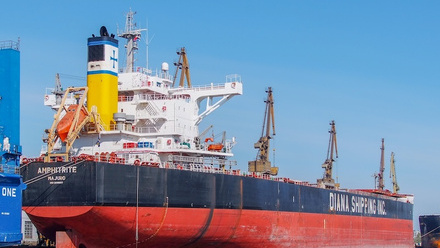
MAIN IMAGE: Port of Felixstowe
Credit: Martin Charles Hatch / Shutterstock.com