Until all seafarers are safe in enclosed spaces, our job is not done
On the Day of the Seafarer 2026, Alasdair Wishart, the IMarEST’s director of technical and policy, highlights the ongoing risk to crewmembers from enclosed spaces. IMO regulations have become significantly tighter in recent years, but until seafarers stop dying from asphyxiation, the job is not done.
There has long been recognition that oxygen depletion and the build-up of asphyxiant gases, such as carbon dioxide and carbon monoxide, occur in enclosed spaces, which pose serious risks to personnel performing routine duties on ships. In fact, entry into enclosed spaces remains one of the leading occupational causes of death for seafarers and shore workers.
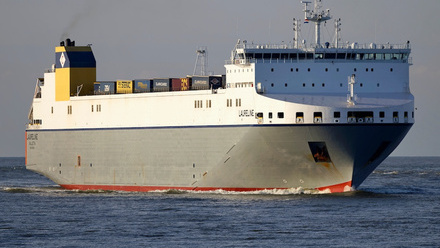
Most incidents occur in cargo spaces, ballast tanks and void spaces, as well as their access points. Casualties can also arise in spaces connected to cargo holds through poorly sealed openings, or from gases released during cargo treatment processes.
On cargo ships, many of those affected are shore workers operating within holds. However, InterManager data also shows that a surprisingly high proportion of fatalities involve senior officers. This suggests that experience and knowledge alone are not sufficient to prevent these incidents, and that other underlying factors are at play.
Our work
Over many years, IMarEST has worked closely with industry partners to support the IMO in strengthening regulations. This has included the creation of an enclosed spaces incident database, hosted by InterManager, recognising that effective data collection is essential to improving safety outcomes.
Understanding the risks
A key step forward came through research led by IMarEST member Dónal Burke, which demonstrated that enclosed spaces can be far more dangerous than previously understood.
While the risks of oxygen depletion and gas build-up were well known, Burke’s work showed that the rate at which these conditions develop had not been properly quantified. His findings revealed that hazardous atmospheres can form much more rapidly than had been assumed.
Crucially, the research demonstrated that oxygen depletion and carbon dioxide build-up begin immediately after a ship’s hold hatch cover is closed. The rate at which conditions deteriorate depends on factors including temperature, cargo moisture content, space permeability, and atmospheric pressure. For example, cargoes such as timber can generate dangerous conditions significantly faster than materials like scrap metal.
Once hatch covers are closed, oxygen within the space is absorbed by organic cargo, leading to the release of asphyxiant gases. These gases can migrate through even very small openings into adjacent areas, creating hazardous environments beyond the cargo hold itself.
Importantly, Burke’s work showed that dangerous carbon dioxide levels can be reached before oxygen concentrations fall to levels traditionally considered unsafe. Oxygen levels may still appear relatively acceptable when carbon dioxide exceeds 4%—a concentration capable of causing brain damage, coma or death.
These findings were presented to the IMO Sub-Committee on Carriage of Cargoes and Containers (CCC9), with recommendations including the introduction of oxygen danger tables for organic cargoes and updated thresholds for carbon dioxide and carbon monoxide.
New regulations
The IMO has since published updated guidance on entry into enclosed spaces, building on work by the Human Element Industry Group (HEIG), in which IMarEST collaborates with organisations including InterManager, The Nautical Institute, and ICS and IACS.
The updated guidance includes:
-
Revised definitions of enclosed spaces, recognising the risks posed by connected spaces and trapped hazardous atmospheres
-
Enhanced training requirements
-
The introduction of enclosed space registers and clear information on their use
-
Standardised warning language, including for shore-based personnel
-
Clear instructions that watchkeepers must not attempt rescue, but instead raise the alarm to enable a safe response
Why are mariners still dying?
Despite these regulatory advances, people are still dying in from enclosed space entry. The HEIG has reframed the issue as a systemic human factors challenge, rather than simply a failure of procedures. Global data supports this view, showing that deaths continue to occur even where comprehensive rules are in place.
One contributing factor may be time pressure. As in many areas of maritime operations, commercial demands can lead to shortcuts or risk-taking. The disproportionate number of senior officers involved in fatal incidents may reflect the influence of such pressures on decision-making.
What is the IMarEST doing now?
As a member of HEIG, IMarEST is contributing to ongoing work to analyse patterns in fatalities and near misses. This includes examining vessel types, operational contexts and roles, to identify recurring causes and risk factors.
A key focus is improving understanding of human factors, including time pressure, organisational culture and risk perception. The evidence suggests that the industry does not necessarily need more procedures, but rather more effective implementation and safer behaviours within existing frameworks.
HEIG is developing a range of practical interventions, including targeted training materials, improved hazard recognition, standardised signage, and the application of the hierarchy of controls to reduce risks at source.
Notably, there is currently no dedicated STCW requirement for training and certification specifically addressing enclosed space entry. As a result, personnel may be fully compliant and experienced yet still lack the practical decision-making skills required in high-risk, time-critical situations.
In contrast, firefighting competence requires defined STCW certification and structured training, which has demonstrably contributed to improving safety outcomes for seafarers.
To address this, HEIG is calling for increased industry awareness and will highlight the importance of training courses focused on enclosed space safety, built around practical competence and human factors.
In the meantime, the work continues. And the IMarEST will continue to contribute the expertise of its global membership until no lives are lost in enclosed spaces at sea.