Ballast water failings in four key areas
A recent report revealed 90% of deficiencies are concentrated across four areas, but ballast water exchange not one of them
A report from RiSK4SEA focusing on the 2025 joint Concentrated Inspection Campaign (CIC) on Ballast Water Management (BWM) and whether “ships meet the requirements of the [BWM] Convention” found that deficiencies were concentrated in a small number of compliance areas.
The campaign, which was jointly carried out by the Paris and Tokyo memoranda of understandings (MoUs) between 1 September and 30 November 2025, two major port state control organisations, aimed to assess whether ships were complying with requirements set out under the 2004 BWM.
According to the report, 90% of deficiencies were concentrated in just four sections. Ballast water record book issues were the most common, accounting for 29% of deficiencies. A further 27% involved ballast water management systems, and another 19% on ballast water management plans. Deficiencies relating to crew training and familiarisation accounted for 16%.
Not an insurmountable challenge
With 96% of the deficiencies classed as non-detainable, the findings suggest that the issues were generally not insurmountable.
This was reflected in the experience of DNV Maritime, which, among other services, provides support to ship owners and system manufacturers on ballast water management.
“In the period before the CIC started and the first couple of weeks, there were a lot of requests where ship owners or ship managers realised that they didn't have all the papers in order,” says Michael Lehmann, Head of Section for Environmental Technologies at DNV Maritime. “With some work to clean up inconsistencies, issue or approve documents as necessary, they brought the management plans up to code.”
In recent years, ballast water management regulations have continued to evolve. In 2025, ballast water record books underwent two changes, with a new format introduced in February and mandatory declarations for electronic record books coming into force in October.
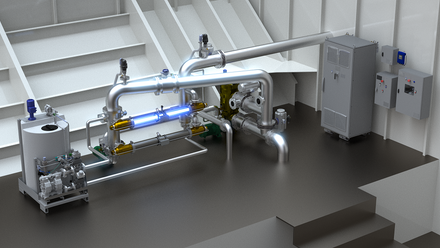
At the same time, ships operate different ballast water treatment systems, each with its own nuances. Lehmann says the largest differences come from the underlying technologies. The two dominant technologies in use – UV-based and electrolysis-based – are “fundamentally different”.
Even within these two technology types, systems can differ from one manufacturer to another, says Lehmann: “Each manufacturer does it a bit differently. Each system will respond a bit differently and has different limits, and each will have different troubleshooting activities that you can do.”
The challenge is compounded by the fact that crew members may move between vessels equipped with different treatment systems, requiring them to adapt to new operating interfaces, maintenance routines, and troubleshooting procedures each time.
Training and familiarisation are key
Perhaps central to all the compliance issues are training and familiarisation.
“The focus has been for some time just to get these systems installed and working,” Lehmann explains, noting this was quite challenging as requirements to install these systems applied to existing vessels not designed to accommodate them.
“We're getting to the next phase where we have to make sure that we are able to operate the systems properly over longer periods of time and make sure we are maintaining and operating these treatment systems in the proper way.”
Lehmann notes that previous CICs have served as learning experiences from which ship owners and managers have learned and improved. He expects this CIC to be no different.
“Hopefully, with the learning and experience from this CIC, ship owners have realised, ‘OK, we need to do a bit more training, we need to make sure that our crews are really aware of the particularities of the system that is installed on that vessel.’”
Tell us what you think about this article by joining the discussion on IMarEST Connect.
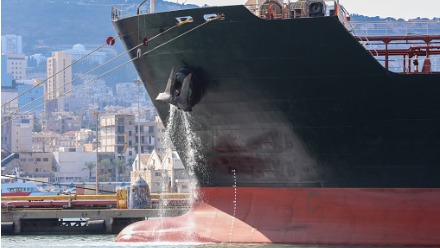
Image: ballast water discharging from a vessel. Credit: Shutterstock.