How COP30 affects marine professionals
Following the 2025 UN Climate Change Conference, steps are in place to help protect the ocean and accelerate decarbonisation in shipping
After 30 years of attempts to reach a global agreement on tackling climate change, the 2025 UN Climate Change Conference (COP30) was, for many, not as ambitious as it should have been. Although a deal was reached, the lack of commitment to develop a roadmap for phasing out fossil fuels was the not-so-hidden elephant in the room.
The giant leap may have been missing, but there were plenty of small steps. Here are just a few of them that affect the maritime and marine industries.
The Blue NDC Challenge gathers support
A high-level ministerial gathering saw countries announce their intention to transform the Blue Nationally Determined Contributions (NDC) Challenge into an implementation task force - Task Force on Oceans.
NDCs are individual countries' official climate action plans outlining how they will reduce emissions and adapt to climate change, with the Blue NDC seeking to encourage ocean-based solutions. Led by France and Brazil, the task force seeks to accelerate the design and delivery of concrete ocean-based climate actions.
An Action Agenda for the ocean
At the same ministerial meeting that discussed the Task Force on Oceans, an Action Agenda Blue Package was also announced. It translated science-based targets called “Ocean Breakthroughs” developed in 2023 under the Marrakech Partnership on Ocean & Coastal Zones into actions.
Covering marine conservation, aquatic food, ocean renewable energy, shipping, and coastal tourism, the Breakthroughs set out specific targets for 2030, such as at least 380GW of offshore renewables, reducing shipping greenhouse gas emissions by 5-15%, investing in marine conservation, and building resilience in local communities.
Accelerating decarbonisation through green shipping corridors
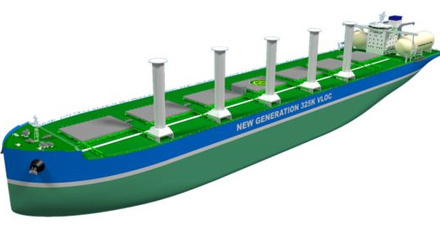
Both the World Green Economy Organization (WGEO) and Solutions for Our Climate (SFOC) held separate events showcasing green shipping corridors which aim to accelerate maritime decarbonisation. These corridors are designated maritime routes where zero-emission shipping is demonstrated and scaled up through coordinated collaboration.
They create zones where new fuels, technologies, infrastructure, and policies are deployed together, effectively serving as testing grounds for the shipping industry's transition to zero-carbon fuels.
IMO focuses on shipping’s energy transition
The IMO’s Net-Zero Framework, which aims to reduce greenhouse gas emissions from ships over 5,000 gross tonnes, faced setbacks in October 2025 when the vote on the Framework was postponed for a year. Nevertheless, the IMO’s – and indeed many nations' - commitment to decarbonising the shipping industry was apparent at a side event. If agreed upon, the framework would set limits on greenhouse gas emissions and introduce a global economic measure to help regulation.
The event covered actions such as propeller design, alternative propulsion, green shipping corridors, and regulatory and support measures.
Resilience4Ports launches climate risk assessment for ports guidance
Resilience4Ports, a multi-stakeholder initiative led by the International Coalition for Sustainable Infrastructure (ICSI), launched its Port Decision-Makers’ Guide to Climate Risk Assessment. The guide acts as a “first step for ports to understand, anticipate, and respond to the impacts of climate change”. By developing a structured climate risk assessment, ports will be able to identify risks, prioritise measures, and potentially improve access to international climate finance.
A new partnership aims to create jobs
Launched at COP30, the One Ocean Partnership seeks to further large-scale marine restoration and protection. The partnership aims to put at least U$20 billion into marine restoration action by 2030 and create up to 20 million jobs.
Tell us what you think about this article by joining the discussion on IMarEST Connect.
Image: humpback whale tail fluke rising from the ocean. Credit: Shutterstock.