How subsea infrastructure is being protected
Subsea pipelines and cables facilitate the global flow of data, electricity, oil and gas
Initiatives continue to help protect subsea infrastructures from potential damage and harmful outside influences.
The 2022 Nord Stream pipeline explosions spotlighted the vulnerability of these infrastructures. Yet undersea infrastructures are at risk from many sources, including natural hazards.
The EU’s Joint Research Centre estimated that annually between 150 and 200 accidental subsea cable damages occur. These are sustained from natural causes such as earthquakes, volcano eruptions or current and sand wave abrasion and fatigue.
Alternatively, human-led damage – both intentional and unintentional – can create wear and tear on the infrastructures. One of the most notable examples is fishing – in shallow waters, anchor damage is a common issue, while deeper out at sea, trawling can create problems such as cable entanglement.
Although repairs to infrastructure damage are effective, they still have the knock-on effects of time and money. Repairing power cables can cause power and transmission loss, which can last up to several months. In terms of cost, the use of vessels and submersibles can prove to be expensive.
Using the power of technology
While conventional protection such as rock placement and mattress covering burial work, technology-driven solutions are also hoping to alleviate the problem. Recently, the Royal Navy’s Mine Warfare Battlestaff, Mine and Threat Exploitation Group and Diving and Threat Exploitation Group took part in Exercise Talisman Sabre 25.
The two-week exercise concerned using unscrewed and remotely operated underwater vehicles to protect undersea infrastructures. The operation involved the deployment of underwater drones and the successful conduct of over 17 joint remotely operated vehicle missions.
VIGIMARE is another example of technology boosting security and lowering risks posed to cables and pipes. This year, it will conduct pilot studies and trial its technology in the Baltic, Mediterranean and Irish Seas, aiming to create a European-wide operable system.
One of the planned studies involves Finnish partner Cinia, and its fibre-optic cable, which can be turned into a sensor that functions as a kind of sensory hearing aid – detecting the presence of vibrations.
As a result, the VIGIMARE system can work out and spot the sounds of different vessels in the vicinity and raise awareness of anything out of the ordinary. Mikko Tiensuu, consultant at Cinia, explained: “The system could detect the location of vessels on the surface, or submarines, or even detect if a vessel is dragging its anchor.”
As well as these technological advances, legislation has been introduced to strengthen the protection for undersea infrastructures. The European Commission launched a Joint Communication to strengthen security and resilience of the cables.
The Communication stated that the EU must boost resilience against any outside threats and vulnerabilities posed to cable infrastructures, while halting any potentially disruptive influences. Part of this is for the EU to detect any possible threats at the earliest opportunity.
It continued by stating that in the event of disruption, damage or attack, the EU must react in coordinated fashion, developing the right capacities to ensure that future recovery is as swift as possible. As well as this, the Communication said that the EU must take action against “malicious actors”, holding them to account.
And last November, the Joint Baltic Declaration on Security in the Baltic Sea was signed by Norwegian State Secretary, Marte Gerhardsen. As a means of protecting critical infrastructures, the signed declaration aims to boost security and stability in the Baltic Sea area.
Tell us what you think about this article by joining the discussion on IMarEST Connect.
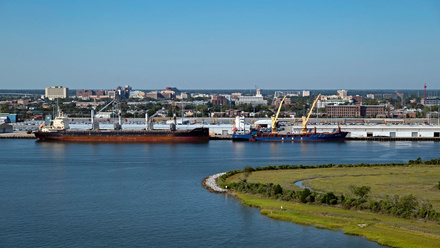
Image: Baltic Sea at the bay of Finland. Credit: Shutterstock.