Two carriers collide in shipping channel causing damage worth $1.1 million
Steering control system component failure leads to incident involving the BBC Africa and the moored Common Faith.
In general, merchant vessels are engineered to move through open water with as little effort as possible, not turn on the spot. Sometimes, an intermittent problem with the vessel’s control systems can develop during critical manoeuvring intervals in which the vessel arrives at or departs from the port – one in which it happens to be near many other ships and assets.
This was how the crew of multi-purpose vessel BBC Africa discovered a control problem with their vessel, on the morning of 25 August 2023, and found themselves on collision course with a moored bulk carrier.
How a system failure took control
As BBC Africa prepared for departure, the second officer worked his way down the predeparture checklist. He tested the steering gear, first from the bridge main control station, then from the port bridge wing control tiller, performing a full turn of the rudder in each case. Everything seemed to be in order. The steering gear pumps, once activated for testing, were left on for manoeuvring.
At 9:30am, a Houston pilot and an apprentice boarded the vessel. The captain reassured the two that everything was in “good working order”, this having been verified by the second officer some 20 minutes prior. A tug was fastened, the engine started, with engineering staff noting no problem. A few minutes before departure, the captain, stationed at the port bridge wing control tiller, did a short function verification of the rudder, 5-10° port and starboard, confirming control authority. At 10:03am, the vessel set off.
The vessel moved slowly into Buffalo Bayou under tug assistance, and crew transferred steering back to the centre helm, seeing the ‘in command FU’ (‘follow-up’) indicator light up to show authority had been transferred to the console.
Eight minutes later, the pilot ordered 10° rudder to starboard. The helmsman confirmed “starboard 10” and duly turned to starboard 10. But the ship’s heading barely changed. “Starboard 20!” ordered the pilot, and then, “hard to starboard! (30°)”.
The FU indicator light on the console went dark. The only indicators in evidence showed ‘hard to port’ – the opposite of the pilot’s command. Frantically, the captain attempted to wrest control of his ship back from the malfunctioning FU system, holding down the ‘emergency override mode’ button on his console. So long as he was holding the button, he had control, and the rudder moved 30° to starboard.
The captain maintained control using emergency override steering. As the vessel advanced toward the opposite bank of the Bayou at a speed of around 6.8 knots, the pilot ordered full astern. The master placed the bow thruster position to 100% starboard thrust.
But, at 10:12am, BBC Africa struck moored bulk carrier Common Faith. The bow of BBC Africa holed Common Faith’s portside bow, puncturing its ballast tank, and causing ballast water to disgorge into the Bayou.
The outcome and lessons learned
Fortunately, crew on either ship were not hurt, but both vessels sustained significant damage. BBC Africa required around $700,000 of repairs including hull and bow damage, and Common Faith saw an estimated $475,000 in port ballast tank and shell plating damage.
The NTSB’s report on BBC Africa concluded that a component failure in the steering control system probably caused the surreal rudder response in that led to the collision.
Several possible culprits could interrupt electrical control signals: the tiller components on the wing bridge stations, the “in command” push-button relays, and the main power supply transformer to the steering control cabinet.
The ship operator replaced all three with original equipment manufacturer (OEM) parts before technicians could fully re-test them for replicating the failure, leaving uncertainty about the exact point of failure. But micro-switch failures in similar steering tillers have been found to cause the same results: unintended rudder movements from lost or misinterpreted electrical signals. The micro switch issue was documented in a manufacturer safety bulletin that was shared after the accident.
The BBC Africa’s simplified voyage data recorder (S-VDR) was inoperative at the time of the accident, so there was no bridge audio or parametric data to reconstruct crew actions and system behaviour. Investigators determined that if crew had initiated emergency steering sooner, the collision may have been avoided.
The operator instituted refresher training emphasising rapid recognition of steering system failures and quicker transition to emergency control procedures.
“Training in steering recovery procedures, including scenario-based drills for bridge and engine teams, is critical to ensure crews can respond in the shortest possible time,” concluded the report.
Tell us what you think about this article by joining the discussion on IMarEST Connect.
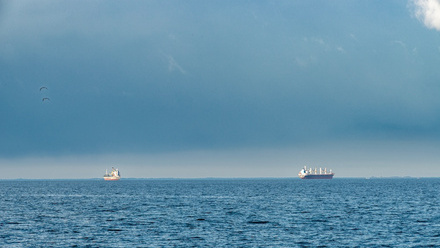
Image: BBC Africa moored at Columbus St. Terminal, Charleston Harbor, alongside Interlink Maritime's Celerity. Credit: Shutterstock.