Race on to save the Great Barrier Reef
The world’s largest coral reef system may have thrived off Australia’s east coast for thousands of years, but its future is looking less bright
In 2025, parts of the Great Barrier Reef suffered the largest annual decline in coral cover since the Australian Institute of Marine Science (AIMS) began monitoring 39 years ago, and some research suggests that by 2050 it could be a shadow of its former self.
“We are in a very delicate position,” says IMarEST Fellow James Crabbe, member of the International Union for the Conservation of Nature (IUCN) Coral Specialist Group.
By far the greatest threat to the reef is ocean warming driven by fossil fuel emissions.
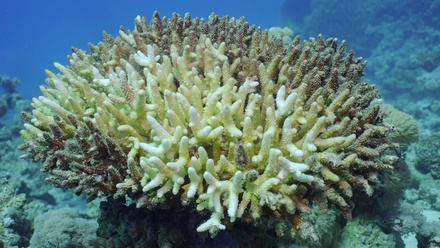
Corals are animals that form a mutualistic relationship with zooxanthellae – algae that live inside the corals. When water temperatures become too high, the corals expel the zooxanthellae, causing them to turn white. Although these ‘bleached’ corals may regain their zooxanthellae and recover to various degrees once waters cool, many die before they can.
“Globally, these bleaching events are happening more frequently and lasting longer,” explains Crabbe. “The bleaching events are happening so often that there’s less time for the corals to recover.”
Bleaching isn’t the only issue facing the Great Barrier Reef’s corals. “A lot of the land alongside the reef is agricultural, so you get pesticides that run off the land, into the ocean, and are deposited in the reef,” Crabbe says. Other impacts include outbreaks of crown-of-thorns starfish, which eat coral at a rapid rate.
“When do we reach a tipping point where it can't recover fast enough? Some people think we've already reached it. Others think we're not quite at that stage,” states Crabbe.
Indeed, recent research reported by the BBC and led by Dr Yves-Marie Bozec claimed the Great Barrier Reef is headed for a "grim future".
Dr Bozec said some parts of the reef, "may partially recover after 2050, but only if ocean warming is sufficiently slow to allow natural adaptation to keep pace with temperature changes.”
"Adaptation may keep pace if global warming does not exceed two degrees by 2100. For that to happen, more action is needed globally to reduce carbon emissions which are driving climate change,” he added.
Proposed solutions for the symptoms
Over the years, multiple solutions have been put forward for the Great Barrier Reef. Among those are coral restoration, genetic work, and geoengineering.
Coral restoration is already underway, but doesn’t come without its problems according to Crabbe, while noting that there are some restoration projects that have shown some positive results, albeit in the short term. “It’s time-consuming, it’s resource-intensive, and you can’t just grow corals, plant them and expect them to grow,” he says.
Research into genetics to help coral reefs adapt to the rapidly changing conditions is progressing but also arrives with risks. “You’re changing the genetic composition of the corals in the field, and that could have serious implications,” says Crabbe.
Geoengineering is among the extreme ends of the solutions. For example, some modelling studies have suggested that injecting particles into the upper atmosphere in certain locations could help reduce warming. “But you can’t just direct it to one particular place, and there’s a lot of uncertainty,” Crabbe notes.
Finding solutions is important, but in the end, “lowering our fossil fuel emissions is absolutely the number one priority,” concludes Crabbe.
Read more on coral reefs: Crabbe on Coral.
Tell us what you think about this article by joining the discussion on IMarEST Connect.
Image: Great Barrier Reef, Queensland, Australia. Credit: Shutterstock.