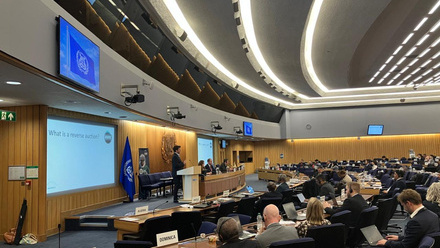
Ahead of MEPC85, IMarEST members highlight barriers to net-zero delivery
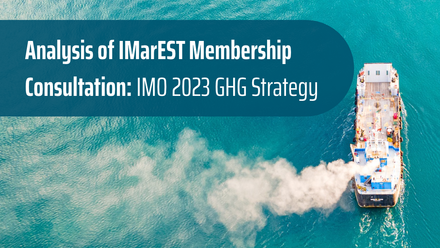
Ahead of MEPC85, the Institute of Marine Engineering, Science and Technology (IMarEST) says its members now identify delivery, infrastructure, and value-chain coordination as the sector's biggest barriers when it comes to IMO 2023 Greenhouse Gas strategy.
The Institute's Ship Energy and Environment Special Interest Group (SEESIG) gathered views from professionals across ship management, classification societies, engineering, science, academia and maritime services.
They found little opposition to the IMO's ambition of achieving net-zero emissions from international shipping. Instead, respondents overwhelmingly identified issues including infrastructure readiness, commercial incentives, fuel availability and the distribution of responsibility across the maritime value chain as the most significant barriers to the progress they are seeking.
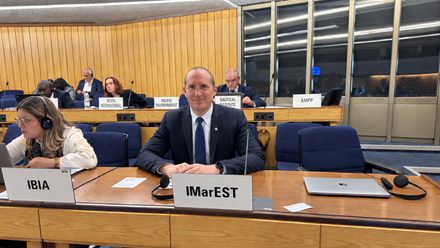
Alasdair Wishart, director of technical and policy at the IMarEST commented: "We are not seeing opposition to the Net-Zero Framework, or to decarbonisation as a principle. This is extremely encouraging as the industry seeks clarity at MEPC85. In fact, our industry snapshot suggests that marine professionals are now increasingly focussing on whether the transition can be delivered at the pace required."
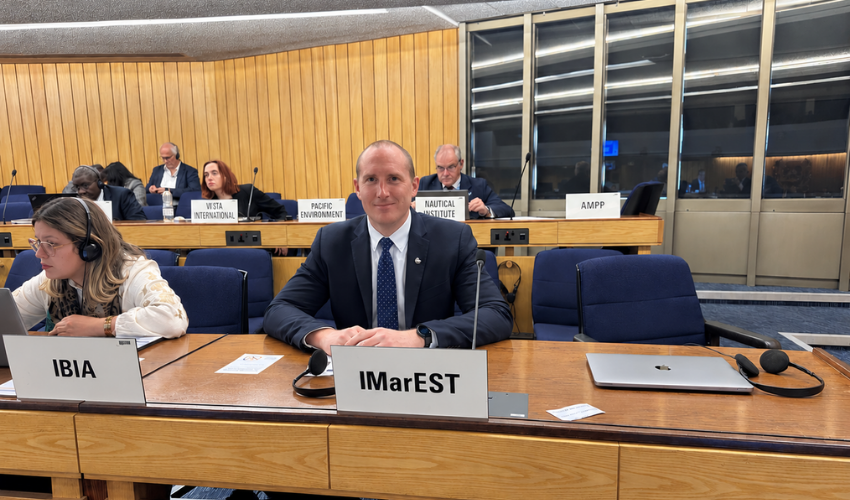
Respondents expressed confidence in a range of potential decarbonisation pathways, including low and zero-carbon fuels, energy efficiency technologies, and operational improvements. However, many highlighted uncertainties around fuel production, bunkering infrastructure, supply chains and long-term regulatory frameworks as factors slowing investment decisions.
They also pointed to growing recognition that maritime decarbonisation cannot be delivered without increased collaboration in the industry. Participants highlighted the need for greater coordination between shipowners, operators, ports, fuel producers, charterers, cargo owners and policymakers to unlock emissions reductions across the sector.
Significantly, respondents identified operational measures such as voyage optimisation, digitalisation and just-in-time arrivals as among the most effective opportunities for reducing emissions in the near term. These findings suggest progress can be achieved today while longer-term fuel and propulsion solutions continue to scale.
Alasdair continued: "Shipping has a unique opportunity to take control of its emissions and accelerate the transition to Net-Zero. The cost of inaction is greater than the cost of action, and many of the technologies needed to reduce emissions already exist or are advancing rapidly.
"But we are seeing that the sector requires answers on how to create the conditions needed for investment confidence for fuels and infrastructure, as well as facilitation to kickstart collaboration on decarbonisation across the sector."
If this sample of IMarEST members is representative of wider industry sentiment, the commitment to achieving net-zero by 2050 is firmly established. The question that IMarEST members are now asking is how quickly practical barriers can be removed in order to deliver it.
To see the full analysis, please visit the SEESIG community page.