A stuck anchor leads to a fatal accident
A deadly accident during a non-standard operation to free a struck anchor sheds light on the importance of stop-work authority
The anchor is a low-tech solution to a high-tech problem. Modern dynamic positioning systems can keep a vessel on-station in high wind and waves, provided there’s enough fuel. But the anchor has been doing so largely unchanged through oar, sail, steam, diesel and nuclear-propelled ships.
Yet even a proven method can go wrong. In March 2025, a vast eight-tonne anchor was raised into the hawse pipe on bulk carrier M/V Amphitrite where it stuck fast. The pressing need to stow the anchor as it crossed the Java Sea was the Master’s concern due to the risk of uncontrolled movement of the anchor and subsequent damage to the ship’s hull at sea. However, the crew’s actions to free the anchor would have deadly results.
What happened
On the morning of 9 March 2025, in the process of heaving the anchor, the decision was taken to lower and hold the anchor in the water because it was covered in thick clay mud. This did not work. Nor did the mud come free using the ship’s anchor wash system, nor even when crew turned the ship’s firehoses on it.
The Master elected to stow the anchor instead. But as it was taken up into the port side hawse pipe, the anchor went in at the wrong angle. Now stuck, it could no longer be lowered. Crew attempts to haul it free using deck mooring winches were to no avail. Crew members set the windlass brake and engaged the chain stopper. Critically, the crew wanted to prevent the possibility that a wave strike would cause the anchor to suddenly fall while the ship was at sea.
A plan was devised. The bosun and fitter would descend into the hawse pipe from above, and fit a hydraulic jack between the pipe edge and the top of the anchor shank, in the hope that it would alter the angle and free the anchor. They attempted the freeing process using the jack on March 10, attempting different angles of attack to free the anchor.
At 1715, with the two men still inside the pipe, the anchor moved suddenly. The anchor chain pinned the bosun against the hawse pipe wall. Below him, the fitter’s body was crushed by the anchor shank. Crew rigged a chain fall with a wire sling to pull the chain off the bosun, and pulled him from the pipe.
No response was heard from the fitter: not when the crew secured a line around his leg to prevent him falling into the sea; not when, two days later, he was retrieved from the pipe with the help of shoreside emergency services. He was pronounced dead at 3:15pm on 12 March.
Outcomes
The subsequent report from the Republic of the Marshall Islands Maritime Administration concluded that there had been “ineffective pre-task risk assessment” in attempting to free the anchor with mooring lines and hydraulic jacks, calling the hazards “reasonably foreseeable”. It also indicated that the oversight in assessing the risk of the anchor dropping led the crew down the path of freeing the anchor and unnecessary risk exposure.
The report identified a number of lessons learned, including having an anchor stuck in the hawse pipe is a non-standard condition that even experienced seafarers may not encounter during their careers and as such, freeing a stuck anchor is a non-routine task for which an established procedure likely does not exist. As a result, non-routine shipboard tasks should not be undertaken without completing an assessment of all available alternative options, including waiting until arrival at port where appropriate shore-side support is available.
The report revealed that a number of crew had misgivings about the plan to send their colleagues into the hawse pipe, but had chosen not to raise these concerns. This in spite of the fact that under stop-work authority crew, no matter how junior, had the right and responsibility to stop work that poses a danger to themselves and others.
As regular Troublespot readers will observe, whether stop-work authority is taken seriously in a real-life context, though – devoid of pressure from above, career implications, or deference to the Master’s authority - is a different matter. Crew “were aware” they had stop-work authority, concluded the report, but it was unclear why they did not exercise it.
In response, the company has undertaken a fleet-wide safety campaign focused on stop-work authority, and distributed lock-out, tag-out (LOTO) kits, and revised its anchor operation and Cold Work Permit procedures.
Interested in this content? Then please join our Human Element SIG. We are currently working on an accident investigation white paper covering established and best practice from the academic and practical aspects. Anyone with expertise in this area would be most welcome to join and continue the work we are doing with our MAIB members.
Tell us what you think about this article by joining the discussion on IMarEST Connect.
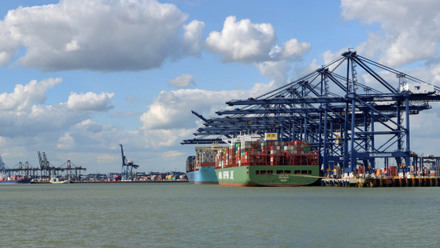
Image: Amphitrite in the port of Gdansk, 2019. Credit: Shutterstock