EU needs to change course for green shipping
How Europe is trying to win the global race to develop cleaner fuels
In the global race to develop cleaner fuels for the maritime industry, Europe is being urged to keep up with its international competitors.
As China, the Middle East and America invest in e-fuel production and infrastructures, the European Commission (EC) has received a letter from a coalition of 20 European clean technology and e-fuel producers.
The letter asks the EC for stronger support for green shipping fuels. While the new Sustainable Transport Investment Plan (STIP) has been acknowledged as a positive move, there is concern that existing initiatives including European Hydrogen Bank auctions and the Innovation Fund are not enough to keep up with other international countries.
The coalition came up with several suggestions put to the EC. These included limiting EU double-sided auctions for maritime fuels to e-fuels only, launching an EU-level supply mandate for marine e-fuels in European ports, and using a quarter of shipping ETS money on producing e-fuels. The coalition says that this could potentially result in €24 billion-production of 5.4 million tonnes worth of e-ammonia between 2030 and 2039.
Other recommendations in the Coalition letter include improvements made to the existing e-fuel incentive mechanism available under the FuelEU Maritime Regulation; raise the 2% sub quota of Renewable Fuels of Non-Biological Origin (RFNBOs); and to introduce 'Made In Europe' requirements for ship e-fuels arriving at EU ports.
Zero-emission corridors
One of Europe's first zero-emission freight corridors will be formed by a new 1,400-TEU ammonia-fuelled container vessel, Yara Eyde, that will ferry fertiliser between North Sea ports this year. The route will connect Rotterdam, Oslo, Brevik and Bremerhaven. With Yara International as the main cargo owner, the vessel is due for delivery by the middle of 2026.
Oslo's Port Director, Ingvar M. Mathisen, said: “With Yara Eyde on the route, Oslo gains a zero-emission corridor to Europe.
“I commend the company for investing in green energy. These are exactly the types of customers we need to get closer to our vision of becoming the world’s most efficient and environmentally friendly city port.”
Meanwhile, European shipping company RFOcean has signed a long-term contract with ETFuels to buy e-methanol at a fixed price rate from 2030. The company has ordered eight new diesel electric-powered, methanol ready fitted chemical tankers.
RFOcean CEO Fredrik Rye-Florentz said that the deal was about “competitive positioning”. He added that by locking in supply now at fixed prices, “We can offer our customers certainty and be in the forefront of a development which makes commercial sense today.”
For ETFuels, the deal validates its pan-Atlantic e-methanol production platform and demonstrates that regulatory clarity can translate into bankable commercial commitments. The company is developing large-scale e-methanol projects across Europe and the United States.
Lara Naqushbandi, CEO of ETFuels, added that astute shipping companies are, “Willing to move early and lock in green fuel supply.
“The deal also sends a clear message to policymakers: stable regulations unlock investment. Any weakening of the EU's green fuel standards would undermine momentum at exactly the wrong time.”
Tell us what you think about this article by joining the discussion on IMarEST Connect.
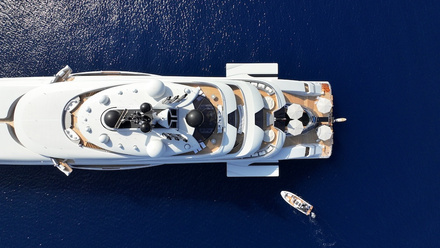
Image: Yara Eyde on the water. Credit: Yara.