Helping sharks by decoding their DNA
Marine ecosystems are vital for the health of the ocean, the planet and many industries – and sharks are a crucial component
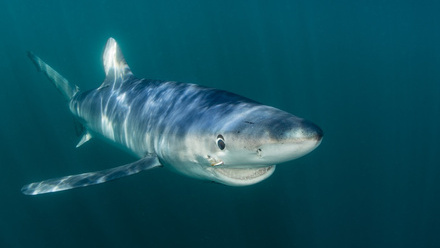
University of Salford PhD student, Lucy Irwin, is analysing DNA across different shark species, providing crucial information for other experts and marine biologists about how to help this vital species survive and thrive.
Irwin's initial interest in conservation (and more broadly, the environment) started during higher education when she began learning about ideologies.
“I became interested in ideas around ecologism and environmentalism, and how the natural world ties into every aspect of human life. At the same time, I was studying biology and ecology from the viewpoint of biodiversity and biological processes. Through this, I realised that without biodiversity, ecosystems cannot function effectively, and without a healthy ecosystem, life as we know it cannot thrive either,” she explains.
While studying for her degree in Wildlife Conservation with Zoo Biology, Lucy also came to understand the importance of marine ecosystems for the health of the planet: “Not only did marine life fascinate me, but it made me appreciate that relationships between marine organisms and their environment are crucial at every trophic level.
“From primary producers like phytoplankton, all the way up to apex predators like some of the sharks and rays I work on today - all species are essential to the function of an ecosystem and must be preserved, not just for the environment, but for fishing industries that rely on the sustainable management of stocks.”
The challenges facing sharks
Lucy's current PhD work is centred around the application of molecular tools to better understand elasmobranchs (sharks, rays and skates), spanning both local and global contexts.
Genetic identification of species in the trade has become a crucial approach in monitoring this, and determining which species are driving this is key. “One part of my project involves investigating this on a global scale by identifying trade hotspots, research trends and patterns in genetic identification that will expose which species face the greatest challenges,” says Irwin.
Lucy adds that another project on the go is mitogenome sequencing of preserved elasmobranch species taken from Indonesia, where samples from a previous study are being repurposed to better understand the genetic make-up of some of the world’s most exploited sharks and rays.
“Here, we are conducting mitochondrial genome sequencing to determine the complete DNA sequence of the mitochondrial genome (the small, circular DNA molecule located inside the mitochondria of the cell),” she states. “These sequences help us understand more about population structure, study evolutionary history and crucially, assist with more accurate species identification.”
For Lucy, the overarching benefit of her research goes hand-in-hand with what she considers one of the greatest challenges: “Knowledge about marine species is increasing every day, with academia playing a major role in the publication of fresh evidence to assist in conservation.
“But, without collaboration in place to bridge the gaps between academia, stakeholders and policy makers, implementing proper change can be tough - especially in parts of the world where resources for research are scarce but so often fundamental. Only with collaboration can we understand the true challenges for marine species, and the greatest problems yet to be solved in conservation.”
When asked about the future of marine species, Lucy concludes: “I always like to remain optimistic. Although parts of my research have uncovered some harrowing details about the decline in elasmobranchs, other parts have served as evidence that nature can recover with evidence-led policy in place. Any future work for me will be done with this in mind. Personally, I would love to return to my first taxonomic love, the crustaceans.
“But whatever organisms I work with, I believe DNA-based technology will be the bedrock of marine conservation research.”
Tell us what you think about this article by joining the discussion on IMarEST Connect.
Image: Great white shark breaching ocean surface. Credit: Shutterstock.