The Cape Town Agreement: a time for celebration, and for reflection
Last week saw a safety milestone for those working in the global fishing fleet, as Argentina became the latest country to accede to the 2012 Cape Town Agreement (CTA). Eric Holliday, IMarEST Fellow and long-time campaigner on the issues explains why we should be celebrating.
I’ve long argued that fishing is the world’s most dangerous industry, but I am hopeful that the Cape Town Agreement will make a difference to the that. With Argentina’s accession, the requirements to allow for entry into force by the CTA have now been met, and an implementation date is set for 24 February 2027. This is a momentous occasion in the path to improved safety of fishing vessels and the people who work on them.
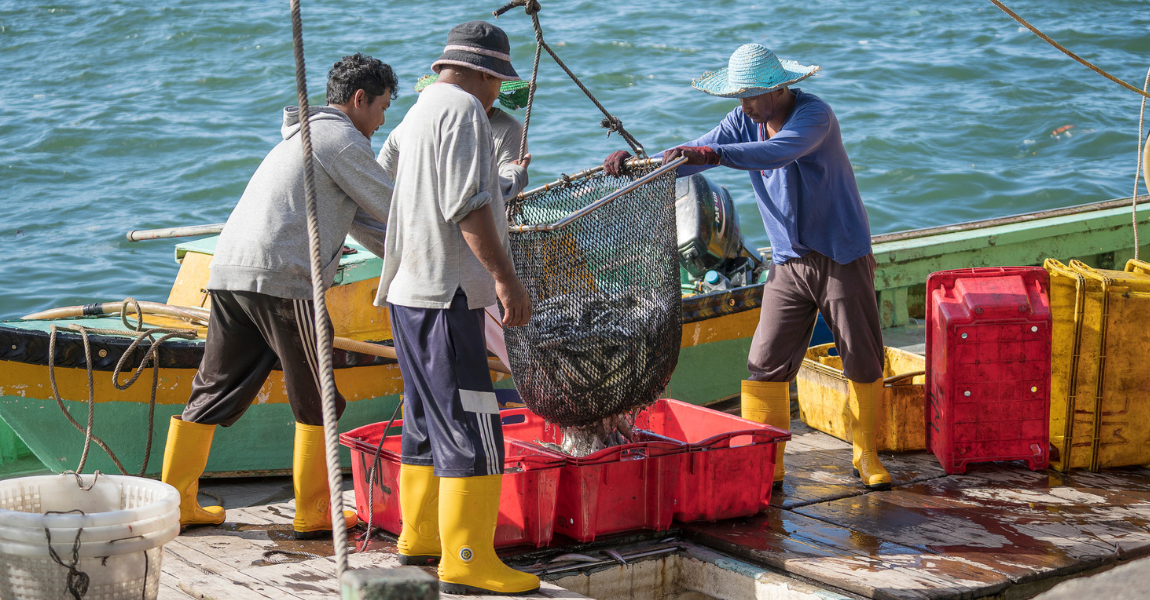
The CTA is a technical standard, only applying to fishing vessels over 24 m (that’s some 68 000 vessels), which collectively only represents some 1.5% of the total fishing vessel fleet. But the standards promoted in the CTA provide a good basis for application in smaller vessels as well.
For me, the most important requirement of the CTA is the ‘no more favourable treatment’ clause, which ensures that vessels from countries that have not ratified the treaty are not given an advantage over those that have.
This means that all fishing vessels entering a port of a party state are subject to the same inspection standards, regardless of whether their flag state has ratified or acceded to the treaty. This prevents all vessels from operating with lower safety standards and closes a loophole that would allow unsafe, sub-standard ships to compete unfairly with compliant vessels.
So, if a vessel from a non-party state enters a port of a party state, it may be inspected, and if it fails to meet the safety standards, it could be detained or restricted, to protect its crew.
The Cape Town Agreement: the bigger picture
The Cape Town Agreement represents the so-called ‘fourth pillar’ in global fishing safety, alongside the following key instruments, all of which are in force:
PILLAR ONE: IMO’s STCW-F Convention on training and certification of fishers.
PILLAR TWO: ILO’s Work in Fishing Convention, 2007, which focuses on fisher safety, welfare, and working conditions.
PILLAR THREE: FAO’s Agreement on Port State Measures to Prevent, Deter and Eliminate Illegal, Unreported and Unregulated (IUU) Fishing, 2009 (PSMA), which seeks to combat IUU fishing through effective port State measures.
Looking at these pieces of legislation together is the most effective approach to significantly improving safety standards because the CTA focuses on vessel safety and does not have much of a focus on operational practices.
For example, the ILO’s Work in Fishing Convention C188 applies to all fishing vessels (not just those of a certain size) and outlines decent conditions of work on board fishing vessels with regards to minimum requirements for work on board; conditions of service; accommodation and food; occupational safety and health protection; medical care and social security. There is an accompanying Recommendation (R199) that advocates for a risk-based approach to safety on board.
A long time coming
I now hope that adoption of the CTA will mark an end to fishers and seafarers being treated differently.
If we look at the path to ratification of the CTA, the process has taken some 50 years. The convention was initially introduced in 1977 as the Torremolinos Convention, and subsequently as the Torremolinos Protocol in 1993, and now only entering into force as the Cape Town Agreement in 2027. Comparing the CTA to its maritime equivalent, SOLAS, the picture is not favourable. SOLAS took just two years from introduction to enter into force in 1914, driven by the sinking of the Titanic in 1912.
As a campaigner in this area, I would also like to highlight that there is a low number of member states acceding to the CTA. With Argentina having now acceded, the number of ratifications still only totals 28, compared to 164 ratifications of SOLAS. And similarly, only 25 Nations have ratified C188, compared to over 100 who have ratified the MLC. This, even though there are nearly 30 times more fishers than seafarers globally, and that fishing is universally acknowledged to be the world’s most hazardous sector.
A final thought
Some years back, one of the most passionate promoters of the Cape Town Agreement, the IMO’s Sandra Rita Allnutt, noted the following:
One of the pillars of the International Maritime Organization is the safety of life at sea. And if we think about the safety of life, we are all the same. It doesn’t matter if a person works in a passenger ship or if the person works in a fishing vessel. Why the life of one should be more important than the life of the other? We need to have safety on board for every single vessel.
For me, getting a critical fishing safety treaty like the CTA over the line is an important achievement, But, we must do more, and we have to do it faster.