European alliance to advance floating offshore wind
Looking to align on port design, standardisation, and best operational practices, Britain joins France and Ireland
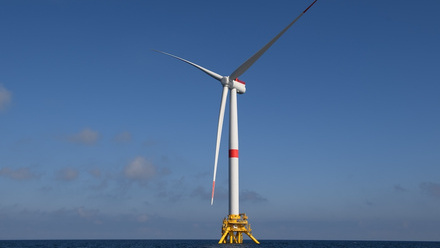
A collaborative approach to unleashing the full potential of the floating offshore wind sector is being pursued by the launch of the Global Floating Offshore Wind Ports Alliance (FLOW Ports Alliance).
Consisting of Associated British Ports (ABP), France’s BrestPort and Ireland’s Shannon Foynes Port, the alliance intends to stimulate cooperation, as outlined by BrestPort Sales Manager, Agathe Le Guillou.
“Floating offshore wind is still an emerging technology,” explains Le Guillou.
“Ports have largely developed capabilities independently, often in response to local pilot or demonstration projects. As the sector moves toward commercial scale, this siloed approach risks inefficiencies and duplicated investment.
“The alliance responds to a clear need for coordinated sharing of experience, technical knowledge and best practice, particularly around port design, quay reinforcement, water depth requirements, heavy-lift operations and spatial planning.”
Le Guillou says a key objective of the alliance is to provide greater consistency and confidence for floating offshore wind developers and operators.
“Aligning approaches to port infrastructure and operations helps ensure that experience gained at one alliance port can be transferred effectively to another.
“This predictability reduces risk for developers, simplifies project planning across regions and supports investment decisions. In this sense, the alliance can positively influence project pipelines and help unlock developments that might otherwise be delayed by infrastructure uncertainty.”
Pathways for growth
Describing floating offshore wind as a “transformative technology” in the global energy transition, Le Guillou sees opportunity for notable growth.
“While current revenues remain modest, the scale of planned projects points to substantial growth across the value chain. Ports are a critical part of this growth, as floating systems require local, regional construction facilities unlike fixed-bottom technologies.
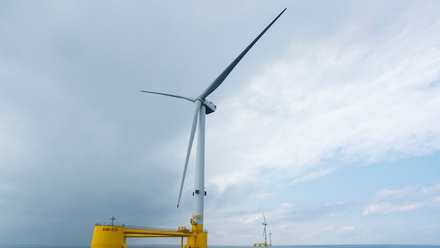
“By enabling deployment in deeper waters with stronger, more consistent wind resources, it significantly expands the addressable offshore wind market.
“Together with fixed-bottom offshore wind, floating technology is essential to delivering the scale of renewable generation required to meet net-zero targets, particularly for countries with deep coastal waters.”
While the alliance initially focuses on Europe, its ambition is “clearly global”, emphasises Le Guillou.
“Floating offshore wind opportunities are emerging in regions such as the United Kingdom, [the] European Union, Norway, Japan and beyond. The alliance actively seeks to welcome port owners and operators developing floating offshore wind infrastructure across key global regions.
“Without timely investment, ports risk becoming bottlenecks that slow deployment and limit economic benefits. Through structured collaboration, regular technical exchanges and collective engagement with stakeholders, the FLOW Ports Alliance aims to ensure ports are ready to support the industrialisation of floating offshore wind worldwide.
"For BrestPort, participation reflects a long-term commitment to enabling the energy transition through resilient, future-proof port infrastructure.”
When the alliance was announced late last year, ABP Head of Offshore Wind Andy Reay said his organisation sees floating offshore wind as “one of the biggest clean energy opportunities for the United Kingdom”.
“This is because floating turbines allow for deployment farther from shore, overcoming the depth limitations of fixed-bottom foundations,” he said.
“We see the Celtic Sea and Scotland as key United Kingdom sites for floating offshore wind with our plans in Port Talbot in Wales and the ABP Cromarty Firth Energy Park in Scotland.”
Added Shannon Foynes Chief Executive, Pat Keating: “With natural deep water, strategic and low-lying shoreside landbanks, and a plan-led investment path aligned to national and European policy, Shannon Foynes Port Company is Ireland’s clearest candidate to serve as the national floating offshore wind hub and a competitive player at European scale.
“Participation in the FLOW Ports Alliance will help us deliver on this potential as we pool the collective insights and expertise of the leaders in this sector across Europe. This is fundamentally about us all working together to realise the enormous economic and environmental dividend that Ireland, the United Kingdom and mainland Europe will derive from floating offshore wind.”
Tell us what you think about this article by joining the discussion on IMarEST Connect.
Image: wide view of BrestPort. Credit: BrestPort.