In support of floating offshore wind farms
Mass production could be underway immediately, directly combatting the climate change crisis, according to long-time Fellow
The extraction of energy using wind turbine generators and its conversion into generally usable electricity will combat storm damage (and global warming) by directly slowing some of these winds.
To have significant effect, the scale of this environmental energy extraction must be such that the total produced new electricity will completely displace that at present being produced from fossil fuels, not simply act to supplement it.
The largest present prototype floating and fixed wind turbines must be refined, optimised, and standardised for mass production on a huge scale so that standard interchangeable units (and component parts) can be produced and maintained at ever lower cost and supplied worldwide.
Eventually the scale and availability of low-cost environmentally friendly electricity should allow all present fossil fuel powered stations to be phased out (unless they are fitted with 100% carbon capture).
A carbon-free process is needed
The quicker this large-scale development takes place and the greater support it has by the public, the better for all. However, the entire production, installation and on-going maintenance process for the turbines must also be as completely carbon free process as possible.
Such large identical units lend themselves to automated production line assembly plus float out and commissioning, with the completed, tested units being towed directly to their installation sites where mooring systems and power cables have all been pre-laid and ready.
This concept largely eliminates the transportation problems associated with large components for assembly offshore. Thus, when in service, the units can be designed to allow a complete time expired unit to be removed and returned to a shore base for all major maintenance, survey and upgrade work to take place, before being returned and reinstated offshore.
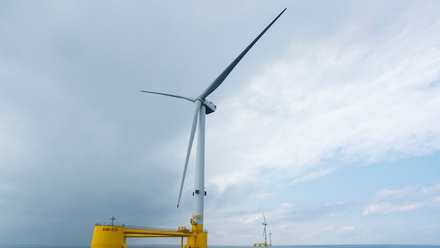
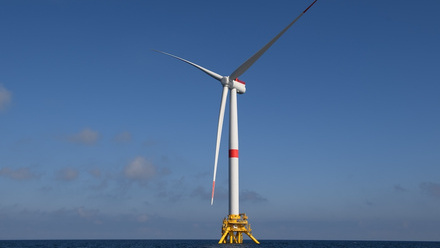
Floating offshore wind is a simple, well proven concept. It means that wind turbines can be taken into deeper waters, further offshore where the winds are stronger and more reliable. In addition, further offshore, the wind turbines have less environmental impact. They are more difficult to see from the shore, and they have far less impact on birds and sea mammals. This means that floating wind is already popular with politicians and most local communities.
The global potential for floating wind is enormous. Many countries do not have shallow waters off their shores, so floating turbines will be the only solution if these nations want to harvest offshore wind energy.
This article represents the views and thoughts of the author, and not of IMarEST.
Malcolm Newell joined IMarEST in 1974 and been a Fellow since the early 1980s.
Tell us what you think about this article by joining the discussion on IMarEST Connect.
Image: two spar floaters transported from Spain to establish the world's first floating wind farm, Hywind Scotland Pilot Park, back in 2017. Credit: Shutterstock.