The high cost of bottom trawling
Bottom trawling remains one of the world’s most efficient fishing methods, but mounting evidence suggests its environmental damage - from habitat destruction to carbon emissions - comes at a far greater cost than its economic returns
Every minute of every day, somewhere, a fishing vessel is dragging a weighted net across the seabed. Bottom trawling is one of the most widely used – and most debated – fishing methods. While it delivers high volumes of species that frequent our plates, it comes with substantial environmental and economic costs.
What is bottom trawling?
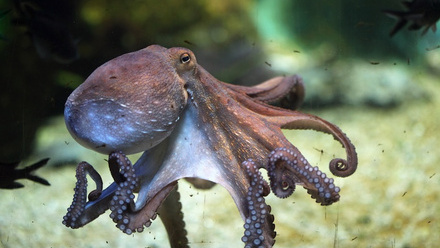
Fishers use bottom trawls to catch species that live on or near the seafloor, such as cod, hake, shrimp, and octopus. Designs vary, but generally the gear consists of large nets held open with heavy doors and fitted with rollers so they can be dragged across the seabed.
The practice occurs wherever the seabed is shallow and flat enough, including in the North Sea, Mediterranean, Southeast Asia, and South Pacific. Industrial trawl nets can stretch hundreds of metres wide, allowing a single vessel to sweep across large areas of seabed in a day.
Multiple problems
Bottom trawling is efficient at catching seabed-dwelling species, but it is not selective. Even with modifications such as sorting grids or turtle excluder devices, trawl nets catch a wide range of non-target species.
A study by researchers at the University of British Columbia found that at least 3,000 species, including endangered ones, are caught in bottom trawls globally. Research from Pristine Seas suggests up to 75% of marine life caught in EU bottom trawls is discarded. Earlier work from the WWF attributes bottom trawling to 92% of the EU’s recorded fishery discards.
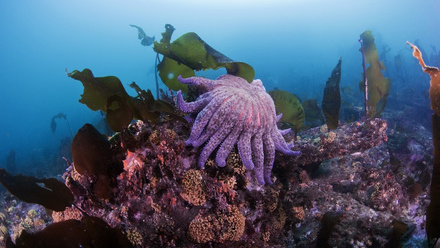
Not all bycatch is species like fish and turtles. In New Zealand last year, a single trawl brought up around six tonnes of protected stony coral, one of several incidents in the country. These slow-growing species can take centuries to develop and form essential habitat for other marine life.
Then there are the species that don’t come up in the nets. After nearly a decade without trawling, Scotland's South Arran Marine Protected Area hosted around three times as many seabed-dwelling animals and twice as many species in their muddy sediments as nearby trawled areas. In the heavily trawled Adriatic Sea, seabed communities now stand at just 25% of their pre-trawling abundance.
The impacts go beyond species loss and habitat destruction. Seabed sediments store huge amounts of carbon. When disturbed, this carbon can be released as CO₂. Research from Utah State University estimated that bottom trawling releases some 370 million tonnes of CO₂ from seafloor sediments every year. The Pristine Seas study calculated that this carbon release, alongside other harms, costs European society up to €16 billion annually – around 90 times the €180 million in annual profits generated by the industry.
The case for protection
The damage bottom trawling inflicts is not uniform, and neither is the potential for recovery.
In the South Pacific, scientists surveying a previously unexamined seamount on the Lord Howe Rise found dense colonies of century-old corals, sponges, and other species. The discovery led to the site being reclassified as a vulnerable marine ecosystem, which can protect it from trawling. However, the industry is pushing to reopen the area. If this happens, proponents of a permanent closure say, the habitats and communities that reside there could be irreversibly lost.
Elsewhere, where habitats are shallower and more dynamic, removing bottom trawling can result in some measurable recovery.
Off the Sussex coast, a five-year-old trawling ban covering more than 300 square kilometres has led to the reappearance of mussel beds, increases in Black Sea bream, and reports of more abundant fish shoals from fishers. It is still early days, but the changes suggest some ecosystems can recover once trawling stops.
Tell us what you think about this article by joining the discussion on IMarEST Connect.
Image: Close up of a bottom trawl net, the Netherlands. Credit: Shutterstock