The RRS Discovery restoration: combining maritime heritage with cutting-edge science
Built as the first purpose-designed Antarctic research ship, RRS Discovery is again helping push the frontiers of science – this time from a drydock in Dundee. John Monasta, associate director of maritime engineering consultancy Beckett Rankine, tells John Bensalhia about the restoration of a ship that once carried Scott and Shackleton
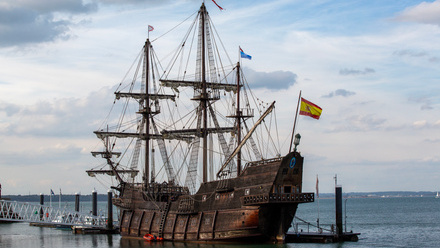
Over 120 years since it was built in Dundee, RRS Discovery is one of the last surviving three-masted wooden vessels from the heroic age of Antarctic exploration. The ship returned to Dundee in 1986, where it is now undergoing significant restoration work that blends traditional skills and modern science.
“The current restoration project aims to preserve, restore and conserve RRS Discovery so that it continues as a key part of interpreting Britain’s maritime heritage story, as well as to preserve and share traditional shipwright skills for future generations,” explains John Monasta, associate director of maritime engineering consultancy Beckett Rankine, which in 2020 performed a comprehensive structural survey of the ship.
A Conservation Management Plan was developed, with the first phase of works (2023-2025) funded by £1.4m from the National Heritage Memorial Fund. The second phase, expected to cost over £2m, is supported by the National Lottery Heritage Fund, the Tay Cities Region Deal, the Northwood Charitable Trust, the Headley Trust, and others.
The project’s first phase - completed within budget despite uncovering hidden issues within the ship’s structure, according to Monasta - focused on structural repairs to the most vulnerable stern section of the ship and deck repairs. Rare teak was sourced, salvaged in 2011 from the wreck of the SS Pegu for the Cutty Sark restoration, and 200-year-old pine was acquired from the Burnside Mill in Perth, Scotland.
While traditional shipbuilding and conservation craftsmanship remained essential, these techniques were modernised where appropriate to improve safety, efficiency, and cost-effectiveness. A large steel support frame was used to reduce the amount of timber needed, soda blasting was used to remove historic paint layers in the sail locker and an electric pitch boiler was adopted to eliminate the risks associated with open flames on a wooden vessel. This work demonstrated how traditional craftsmanship and modern innovation can work hand in hand.
The second phase of the restoration (anticipated to take around 18 months) is focused on replacing the bulwarks and stanchions. Work will begin at the stern and progress along the port side of the hull in sections.
“This staged method allows the team to uncover and address any further areas of deterioration as they go, ensuring that no hidden issues are missed,” explains Monasta. “Once all structural repairs are complete, the full hull will be reassessed before being freshly caulked and painted, giving the vessel a coherent and durable external finish.”
A major aim of phase two is to tackle the issue of water ingress and moisture accumulation within the hull. “The project will explore solutions to stabilise the internal environment, including developing a humidity control system designed to protect the ship’s timber structure over the long term.”
With the decision made to keep RRS Discovery permanently in the dry dock rather than refloat her, a new, more comprehensive support structure will be installed to improve load distribution, reduce stress on the hull, and ensure the ship remains safely supported for decades to come.
The ship’s historic identity will serve as a platform for research, exploration, and scientific innovation, with Dundee Heritage Trust and Beckett Rankine actively building partnerships with universities. A new Knowledge Transfer Partnership (KTP) has been established between Beckett Rankine and the University of Greenwich, with RRS Discovery serving as the primary case study.
“The KTP aims to develop an advanced Finite Element Analysis (FEA) methodology tailored specifically to large timber vessels,” says Monasta. “Unlike iron or composite hulls, timber ships behave as a complex aggregate of planks, caulking, fastenings, curvature, and long-term timber creep, which traditional FEA tools struggle to model accurately.”
Monasta says that the new methodology will capture this behaviour in far greater detail. Once embedded into Beckett Rankine’s services, it will open the door to affordable, high-quality structural modelling for the wider maritime heritage sector.
The University of Southampton has been applying advanced scanning and digital modelling techniques to create an accurate 3D representation of the ship. “These models have been tested in the university’s hydrodynamic tank to replicate the conditions RRS Discovery faced during its Antarctic voyages,” explains Monasta. “This work not only deepens understanding of the vessel’s performance and stresses during its expeditions, but also contributes valuable data to guide future conservation strategies.”
As a result of these works, RRS Discovery in its 125th anniversary, continues to inspire new knowledge as well as preserve its iconic past.
Tell us what you think about this article by joining the discussion on IMarEST Connect.
Image: RRS Discovery. Credit: Dundee Heritage Trust