Beyond the turbines
Offshore wind developments require joined up thinking, from workforce skills to port capacity
Offshore wind is often described as one of the great hopes of the energy transition. In the UK alone, it already provides 19% of total electricity generation. The Clean Power 2030 Action Plan places it at the heart of Britain's ambition to reach 95% clean electricity by 2030.
But turning wind into power depends on more than the wind itself. The infrastructure, expertise, and institutions required to deliver it at scale are also growing alongside the industry they serve.
Before the first foundation
Offshore wind development begins with an understanding of the marine environment. In the UK, surveys of the marine environment have by and large been done on a project-by-project basis. Over the past four years, however, the POSEIDON (Planning Offshore Wind Strategic Environmental Impact Decisions) project has been assembling seabed, seabird, and marine mammal data to support offshore wind expansion while helping to protect a healthy ocean.
An online planning tool is due in summer 2026, giving developers, regulators, and marine planners a stronger basis for understanding where development could take place, what sensitivities exist, and where data gaps remain.
Engineering lessons from other sectors
For Claudia Scragg, a structural and geotechnical engineer who moved from oil and gas into offshore renewables, offshore wind can benefit from translating hard-won knowledge from the more mature offshore oil and gas sector into its own.
“I don't think [offshore wind] requires new engineering, just the capability of translating those learnings [from oil and gas] into the wind industry,” she says.
Many of the problems facing offshore wind are familiar to oil and gas engineers: corrosion, geohazards, cyclic loading, soil conditions, and long-term asset integrity. “The environment is the same, but the nuances of the infrastructure are different," says Scragg.
Those nuances matter more as turbines get larger and wind farms are expected to last longer. Foundations must be designed not only to support bigger structures, but to do so over decades in a harsh marine environment. Floating turbines, Scragg notes, push those demands further still.
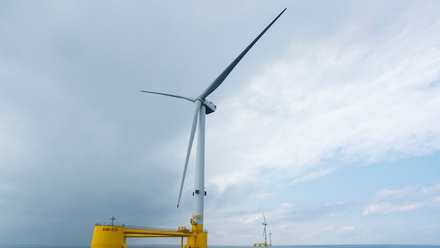
Where a fixed foundation transfers loads directly into the seabed, a floating platform must manage constant movement while maintaining the right angle needed for efficient generation. Other differences Scragg highlights include multiple anchoring points, placed in different types of seabed and facing more varied conditions than a fixed foundation encounters.
Scaling up needs confidence
Technical performance is only one part of the puzzle. For floating wind, “responsible development…should deliver capacity at the scale and speed required, whilst ensuring projects remain safe, bankable, and insurable,” says Manuel Ruiz, Renewables Director at Lloyd’s Register.
In March 2026, Japan’s Floating Offshore Wind Power Technology Research Association (FLOWRA) and Lloyd’s Register signed a Memorandum of Understanding to explore collaboration on floating offshore wind technology development. The partnership brings together Japan’s floating wind ambitions and manufacturing capabilities with Lloyd’s Register’s maritime, offshore engineering, assurance, and certification expertise.
"A risk-based certification approach, aligned with the spirit of international codes and standards, can play a critical role in enabling industry scalability," says Ruiz. “By promoting best practice and consistency, Certification Bodies can strengthen main confidence among key project stakeholders and investors that floating wind turbines can be designed, manufactured, installed, operated and will perform as intended.”
The foundations for this kind of assurance already exist in the ISO frameworks developed for offshore oil and gas and the IEC standards used in offshore wind. As the technology matures, frameworks will need to be tested, extended, and modified.
"It is essential to continue incorporating new industry experience into the standards, ensuring they evolve in line with technological advancements and operational learnings, ultimately supporting the sustainable growth and maturity of the sector," says Neil Morgan, Offshore Wind Engineering Manager at Lloyd’s Register.
AI and data
Offshore wind projects depend on large volumes of environmental, engineering, operational, and inspection data. AI and automation may help process that information, run model cases, and support maintenance decisions.
A UK programme backed by Ørsted recently selected two firms to develop AI-driven solutions: AIM Group, working on early detection of structural defects, and Entopy, focused on understanding how disruptions propagate across complex offshore systems.
Scragg sees the value of AI and automation in calculation-heavy workflows. For example, in “integrated load analysis, you need to run thousands of combinations of cases. For that, AI is great. You need to crunch a bulk of numbers and do all the post-processing," she says.
However, she cautions against treating AI or modelling tools as substitutes for engineering judgement. "People coming out of university are getting used to just pushing a button. They don't actually know how to challenge or dissect what they're getting."
She describes mentoring an engineer whose structural model failed to reflect the expected response of the component under the applied loading, showing no torsion where torsional behaviour should have occurred. The issue was not identified because the engineer did not recognise that the model’s behaviour was inconsistent with the physical response expected for that type of loading.
From energy to economies
As offshore wind scales, its impact also extends far beyond individual wind farms. It creates demand for ports, vessels, manufacturing, grid infrastructure, workforce training, environmental services, digital tools, and long-term operations and maintenance.
“Offshore wind developments are influenced not only by site-specific conditions, but also proximity to ports, supply chain capabilities, workforce availability, or access to main materials, among other factors,” says Morgan.
This whole-system logic is visible in places like Wales, where the Renewable Energy Sector Deal is framing renewable energy around regional investment, jobs, infrastructure, and local benefit.
The Deal “represents a collective commitment to accelerate renewable deployment, strengthen Welsh supply chains, build the workforce of the future and ensure that communities across Wales share in the benefits of the transition to a cleaner, fairer and more resilient energy system," Rebecca Evans, Cabinet Secretary for Economy, Energy and Planning, wrote in the Welsh Government's report.
Offshore wind may begin with the need for clean energy, but its delivery depends on almost every part of the marine and maritime world working in concert – and on each part being ready for the scale of what is coming.
Tell us what you think about this article by joining the discussion on IMarEST Connect.
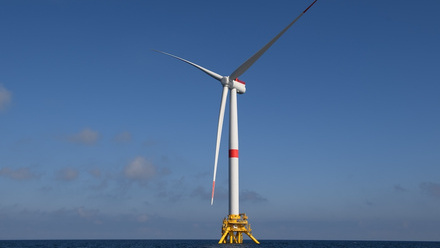
Image: Offshore wind turbines, the Netherlands. Credit: Shutterstock.