Into deep waters – the future for offshore wind farms
A move into deeper waters to capture more offshore wind is pushing the industry to innovate
With the number of offshore wind turbine generators (WTG) installed and fully commissioned reaching 15,000 last year [i], offshore wind generation is now becoming a mainstream electricity source in many parts of the world.
China leads the way with approximately 7,300 WTGs fully commissioned offshore, but the UK is the European leader, with almost 2,900 fully commissioned WTGs, representing an installed capacity of over 16GW.
The result is that wind was the UK’s biggest single renewable source of electricity in 2025, according to provisional figures from the National Energy System Operator (Neso) [ii], and this electricity comes at a cost of generation competitive with other methods [iii].
According to the Global Wind Energy Council, 80% of the world’s offshore wind resource potential lies in waters deeper than 60m[iv]. In these areas – in water depth beyond the existing limits of “fixed bottom” methodology - floating offshore windfarms using WTGs mounted on floating substructures offer the potential to extend the range of installation.
So far, there are only five floating offshore windfarms in the world that are operational with three or more turbines, alongside a handful of single or dual turbine sites. But with such vast areas of potential wind generation still to be accessed, the prize for generation in deeper waters is clear. This continues to drive significant technology and methodology development efforts in the industry.
The technical challenges of developing and operating offshore wind farms in deeper water are significant, but many have been successfully tackled and addressed in adjacent marine engineering sectors, largely the offshore oil and gas industry. Much of the effort involves adapting technology to the specific needs of floating wind, but new technologies and techniques are required.
Lessons learned from test and demonstration floating windfarms are being applied to future deployments in a way that will reduce cost and support development of a specialist supply chain. As a result of advances from floating test and demonstrator projects, the first commercial scale offshore wind farms are now advancing in development [v].
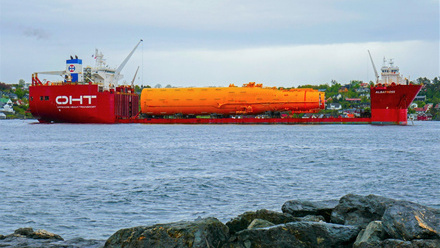
A significant amount of work will be required to deliver commercial scale floating offshore windfarms. Ports must be adapted to accommodate integration of WTGs and floating structures, which can reach 100m in beam and length, and new strategies will be required to enable mass production of semi-submersible substructures at scale.
With the wind turbine integrated on the floating substructure in port, transport and installation activities require advanced modelling to predict weather windows and schedule activities. Dynamics requires adaptation of fixed bottom proven WTG designs and development of new, higher capacity, dynamic cables.
However, progress is being made. Where major component exchange in floating WTGs previously required towing substructures to shore, a world-first technical solution saw a generator on a turbine at the Kincardine floating wind farm in Scotland replaced in situ in 2024 [vi].
As technology advances, vessel capabilities must keep pace, driving calls for more standardisation and clearer definition of future requirements.
In parallel to the advancement of floating wind, alternative substructures are under development for deeper water. If proven successful, they could reduce or eliminate many technical challenges, simultaneously cut costs, shorten supply chains and increase local content. This includes the development of alternative substructures that do not fully float, offering the potential to extend the range of offshore wind to ~150m water depth before floating substructures are required [vii].
Just as fixed offshore wind has made huge strides to reduce costs and become a mainstream source of electricity generation, there is huge potential for technologies that can deliver offshore wind generation in deeper water areas to become mainstream in the coming decades. With the vast majority of technical wind resource located in areas of deeper water, there is a significant incentive for companies and institutions to develop their capabilities enabling reliable electricity generation and transmission at acceptable costs from deep water areas. The UK Government recognises this opportunity and, in the upcoming state support auction (AR8), has added a new technology pot “Other Deepwater Offshore Wind” (ODOW), enabling developers to commit to emerging substructure technologies.
Tell us what you think about this article by joining the discussion on IMarEST Connect.
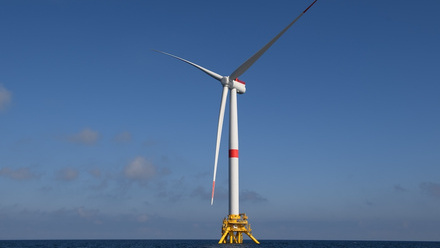
Image: Offshore wind turbine. Credit: Flotation Energy
[i] TGS / 4C Intelligence Platform https://www.tgs.com/wind/market-intelligence
[ii] BBC News - Record year for wind and solar electricity in Great Britain in 2025 -https://www.bbc.co.uk/news/articles/cz947djd3d3o
[iii] Cost comparison of generation methods https://energy-solutions.co/articles/sub/offshore-wind-economics-2026
[iv] Global Wind Energy Council - Report outlines enormous potential for floating offshore wind in energy transition - https://www.gwec.net/news/report-outlines-enormous-potential-for-floating-offshore-wind-in-energy-transition
[v] Green Volt Offshore Wind Farm https://greenvoltoffshorewind.com/
[vi] In-situ major component change example https://www.offshorewind.biz/2024/09/20/worlds-first-in-situ-generator-swap-on-floating-wind-turbine-completed-offshore-scotland/